Mitomycin C
日本語原題:マイトマイシン注用10mg
Source images
2 imagesThe artwork keeps its original Japanese/Chinese lettering. Open “Text in this image” under a picture to read what it says in your language (machine-read, may contain errors).
Text in this image machine-read · may contain errors
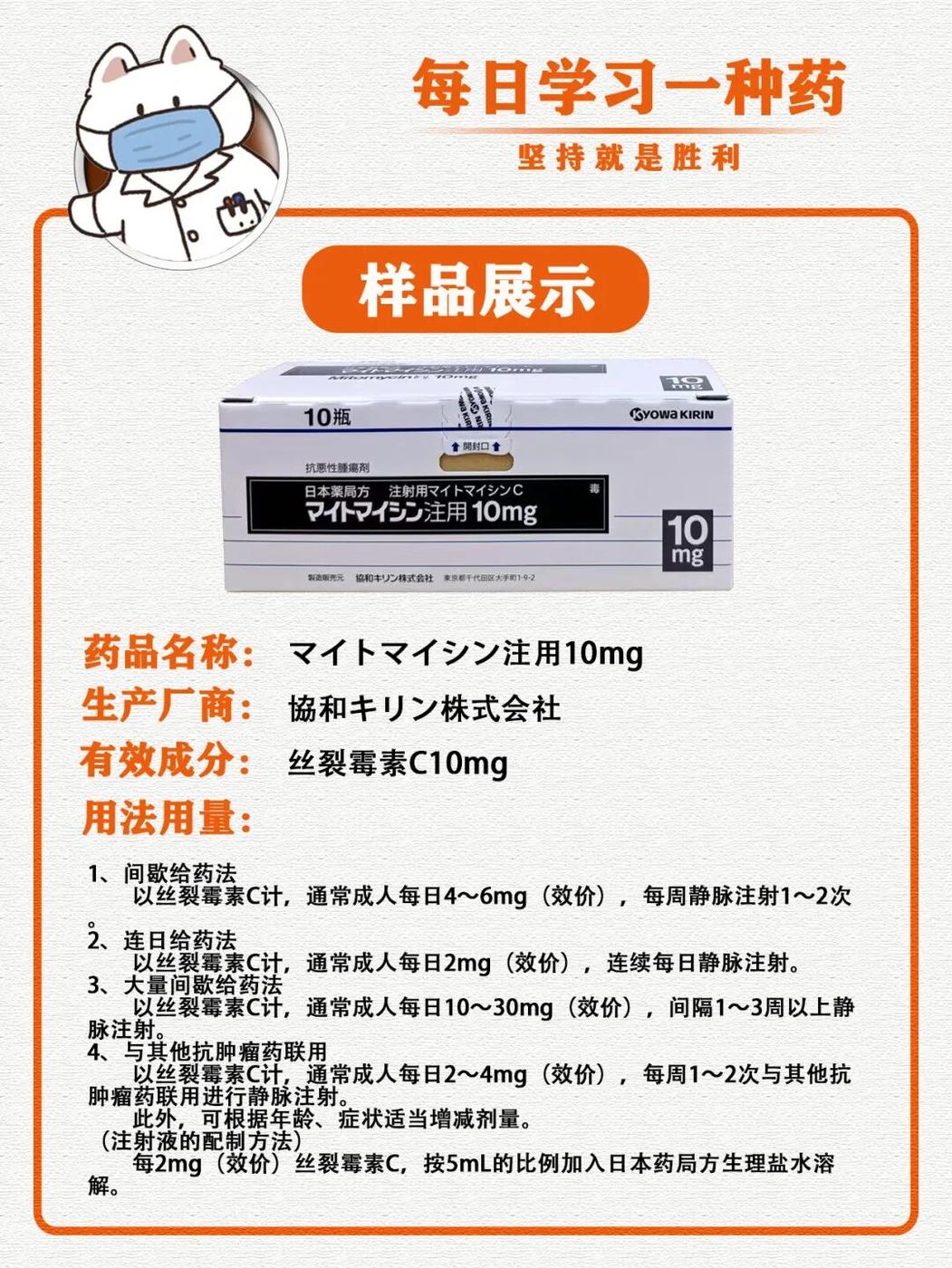
10 bottles KyOwaKIRIN Japanese Pharmacopoeia Mitomycin C for injection For injection Mitophysin injection 10 mg Drug Name: Mitomycin 10mg for injection Manufacturer: Active ingredients: Mitomycin C 10mg Dosage and administration: Based on mitomycin C, adults usually receive 4~6mg (potency) daily, intravenous injection 1~2 times a week 2. Continuous dosing method Calculated as mitomycin C, adults usually receive 2mg (potency) daily for continuous daily intravenous injection. 3. Large-volume intermittent dosing method Calculated as mitomycin C, adults usually take 10~30mg (potency) daily, with intravenous intervals of 1~3 weeks or more Intravenous injection. 4. Use in combination with other antitumor drugs Calculated as mitomycin C, adults usually take 2~4mg (potency) daily, 1~2 times a week with other antibodies Oncology drugs are combined for intravenous injection. Additionally, dosage can be adjusted appropriately according to age and symptoms. (Preparation method of injection solution) For every 2mg (potency) of mitomycin C, dissolve in 5mL of Japanese pharmacy saline solution
10瓶 KyOwaKIRIN 日本薬局方注射用マイトマイシン C 注射用 マイトフィシン注用 10mg 药品名称: マイトマイシン注用 10mg 生产厂商: 有效成分: 丝裂霉素C10mg 用法用量: 以丝裂霉素C计,通常成人每日4~6mg(效价),每周静脉注射1~2次 2、连日给药法 以丝裂霉素C计,通常成人每日2mg(效价),连续每日静脉注射。 3、大量间歇给药法 以丝裂霉素C计,通常成人每日10~30mg(效价),间隔1~3周以上静 脉注射。 4、与其他抗肿瘤药联用 以丝裂霉素C计,通常成人每日2~4mg(效价),每周1~2次与其他抗 肿瘤药联用进行静脉注射。 此外,可根据年龄、症状适当增减剂量。 (注射液的配制方法) 每2mg(效价)丝裂霉素C,按5mL的比例加入日本药局方生理盐水溶
10 bottles KyOwaKIRIN Japanese Pharmacopoeia Mitomycin C for injection For injection Mitophysin injection 10 mg Drug Name: Mitomycin 10mg for injection Manufacturer: Active ingredients: Mito…
Text in this image machine-read · may contain errors
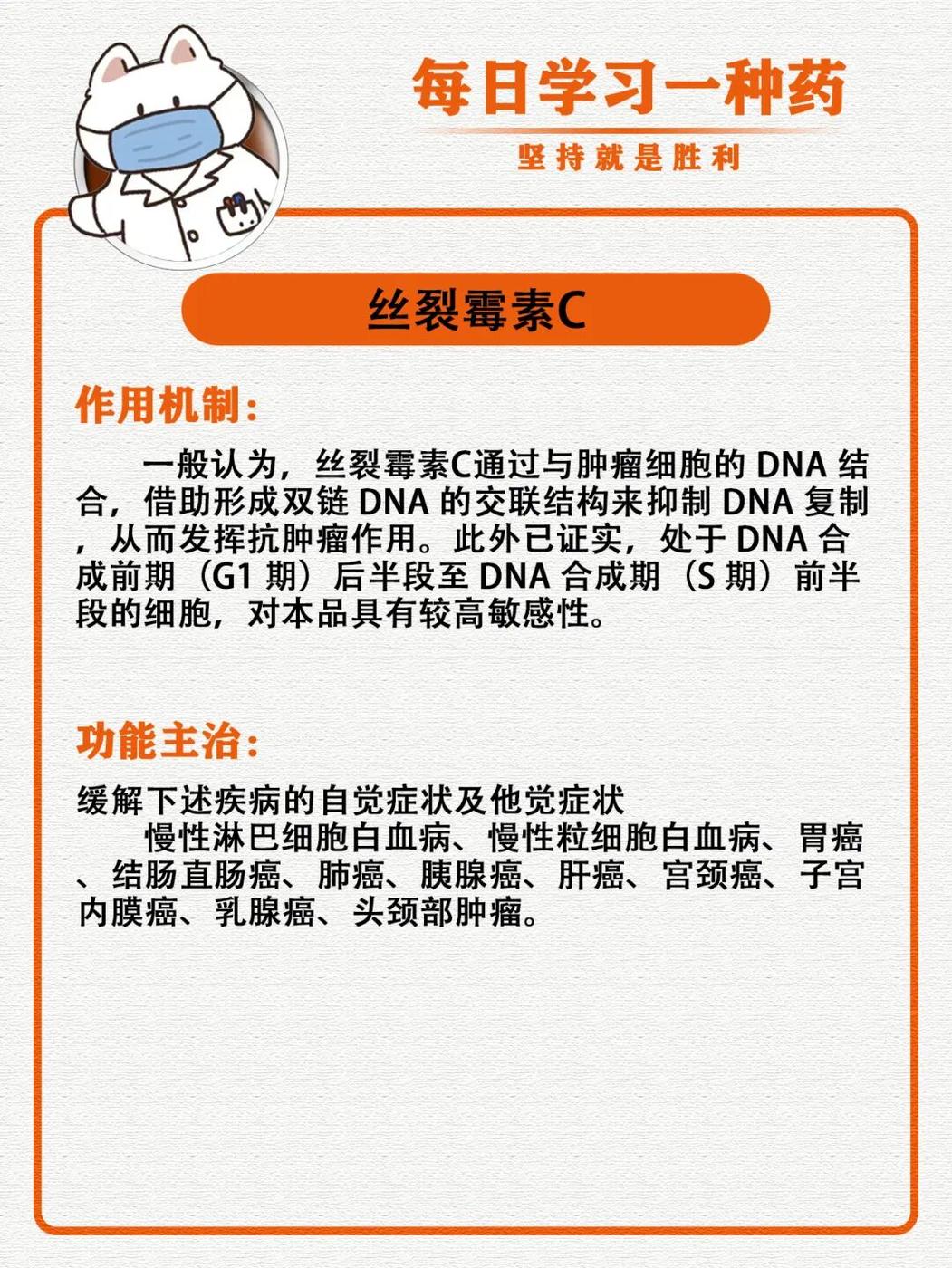
Mitomycin C Mechanism of action: It is generally believed that mitomycin C forms a DNA knot with tumor cells By using the cross-linked structure that forms double-stranded DNA to inhibit DNA replication Thus, it exerts anti-tumor effects. It has also been confirmed that DNA synthesis is involved From the latter half of the pre-formation phase (G1) to the first half of the DNA synthesis phase (S phase). Cells of segment segments, showing high sensitivity to this product. Functions and indications: Alleviate subjective and external symptoms of the following diseases Chronic lymphocytic leukemia, chronic myeloid leukemia, Colorectal cancer, lung cancer, pancreatic cancer, liver cancer, cervical cancer, uterus Endometrial cancer, breast cancer, head and neck tumors.
丝裂霉素C 作用机制: 一般认为,丝裂霉素C通过与肿瘤细胞的DNA结 合,借助形成双链DNA的交联结构来抑制DNA复制 从而发挥抗肿瘤作用。此外已证实,处于DNA合 成前期(G1期)后半段至DNA合成期(S期)前半 段的细胞,对本品具有较高敏感性。 功能主治: 缓解下述疾病的自觉症状及他觉症状 慢性淋巴细胞白血病、慢性粒细胞白血病、 结肠直肠癌、肺癌、胰腺癌、肝癌、宫颈癌、子宫 内膜癌、乳腺癌、头颈部肿瘤。
Mitomycin C Mechanism of action: It is generally believed that mitomycin C forms a DNA knot with tumor cells By using the cross-linked structure that forms double-stranded DNA to inhibit DNA…