Midodrine Hydrochloride
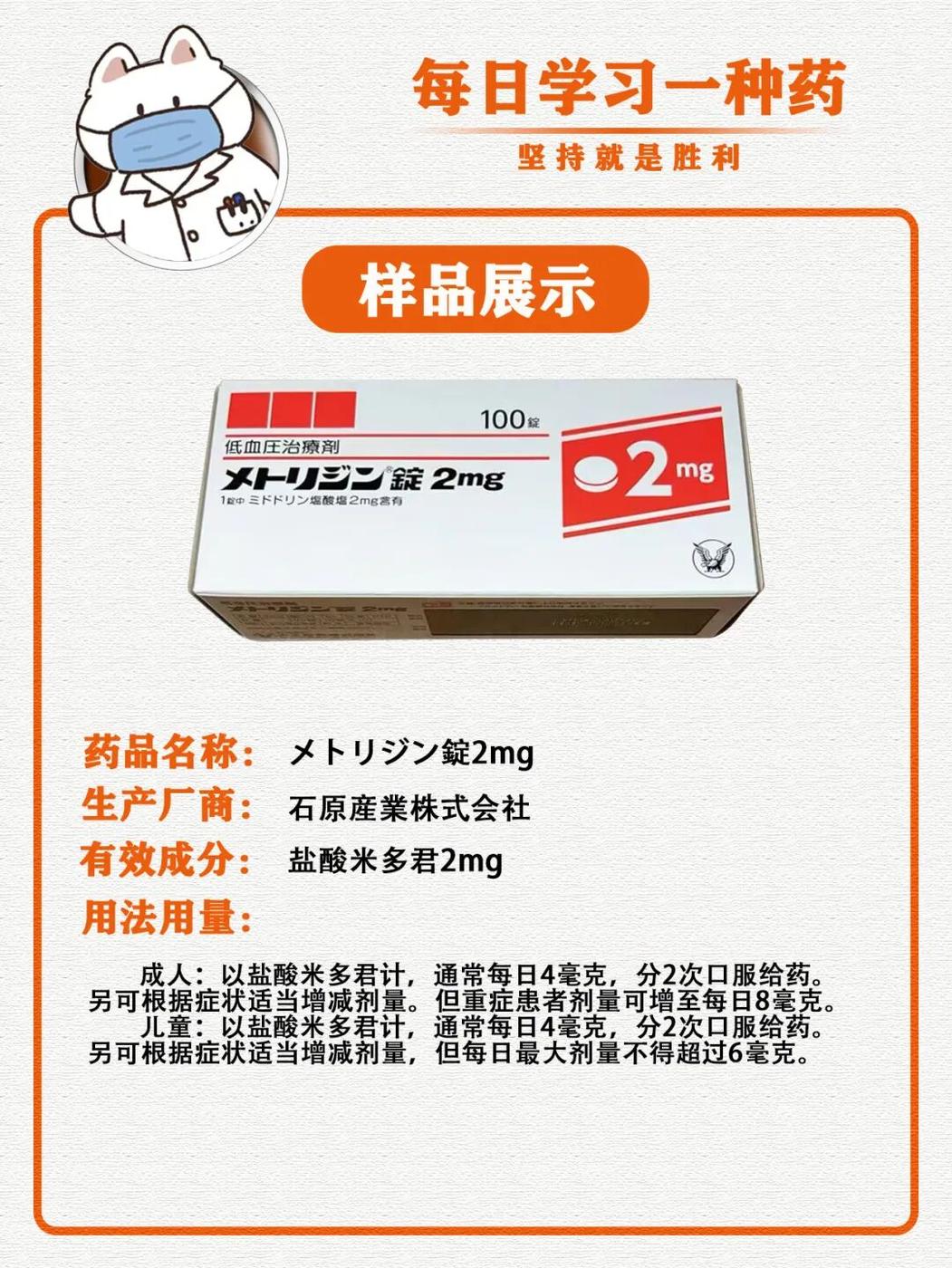
日本語原題:メトリジン錠2mg
Each tablet contains 2 mg of midodorin hydrochloride.
Source images
2 imagesThe artwork keeps its original Japanese/Chinese lettering. Open “Text in this image” under a picture to read what it says in your language (machine-read, may contain errors).
Text in this image machine-read · may contain errors
1. New Chusan Dodrin Acid Field 201g Second Drug Name: × Bu J Tablets 2mg Manufacturer: Ishihara Sangyo Co., Ltd Midojun hydrochloride 2mg Active ingredients: Dosage and administration: Adults: Calculated as midodrol hydrochloride, usually 4 mg daily, divided into two oral doses. Alternatively, dosage can be adjusted appropriately according to symptoms. However, for severe cases, the dose can be increased to 8 mg per day Children: Usually 4 mg orally administered in two doses per day, calculated as midojun hydrochloride. Dosage can also be adjusted appropriately based on symptoms, but the maximum daily dose should not exceed 6 mg.
1 新中三ドドリン場酸場 201g 第の 药品名称:×卜J锭2mg 生产厂商: 石原産業株式会社 盐酸米多君2mg 有效成分: 用法用量: 成人:以盐酸米多君计,通常每日4毫克,分2次口服给药。 另可根据症状适当增减剂量。但重症患者剂量可增至每日8毫克 儿童:以盐酸米多君计,通常每日4毫克,分2次口服给药。 另可根据症状适当增减剂量,但每日最大剂量不得超过6毫克。
1. New Chusan Dodrin Acid Field 201g Second Drug Name: × Bu J Tablets 2mg Manufacturer: Ishihara Sangyo Co., Ltd Midojun hydrochloride 2mg Active ingredients: Dosage and administration: Adul…
Text in this image machine-read · may contain errors
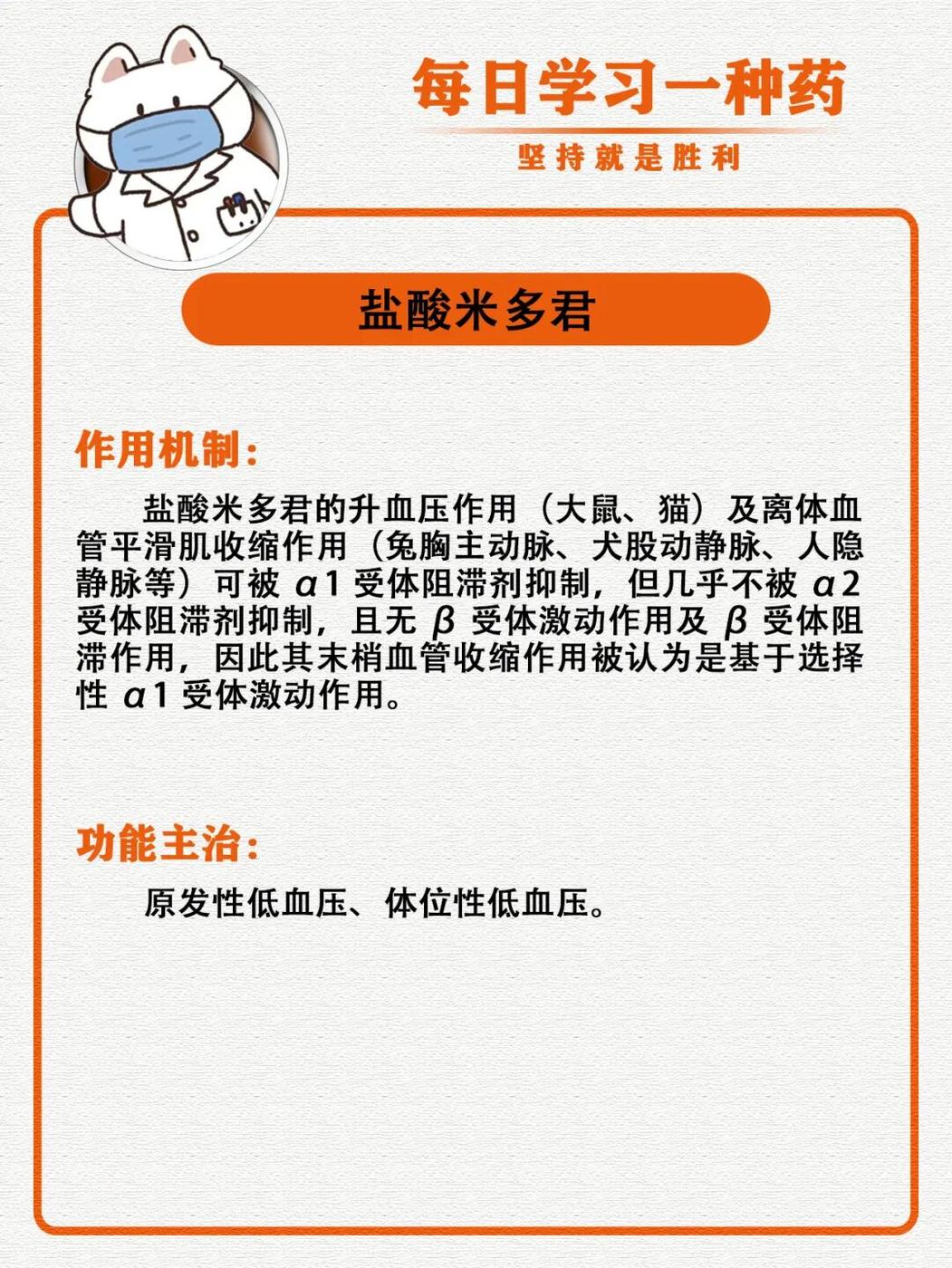
Mido-kun hydrochloride Mechanism of action: The blood pressure-raising effect of Midojun hydrochloride (in rats and cats) and isolated blood Ductal smooth muscle contraction (avoids thoracic aorta, canine-femoral artery and vein, human concealment). venous and other sources) can be inhibited by α1 receptor blockers, but are almost never affected by α2 Receptor blockers inhibit it, and there is no β receptor agonizing effect or β receptor blockade and thus its unending vasoconstriction is considered selective α1 receptor agonist. Functions and indications: Primary hypotension, orthostatic hypotension.
盐酸米多君 作用机制: 盐酸米多君的升血压作用(大鼠、猫)及离体血 管平滑肌收缩作用(免胸主动脉、犬股动静脉、人隐 静脉等)可被α1受体阻滞剂抑制,但几乎不被α2 受体阻滞剂抑制,且无β受体激动作用及β受体阻 滞作用,因此其未梢血管收缩作用被认为是基于选择 性α1受体激动作用。 功能主治: 原发性低血压、体位性低血压。
Mido-kun hydrochloride Mechanism of action: The blood pressure-raising effect of Midojun hydrochloride (in rats and cats) and isolated blood Ductal smooth muscle contraction (avoids thoracic…