Cardiovascular · CARDIOVASCULAR

Tamsulosin Hydrochloride

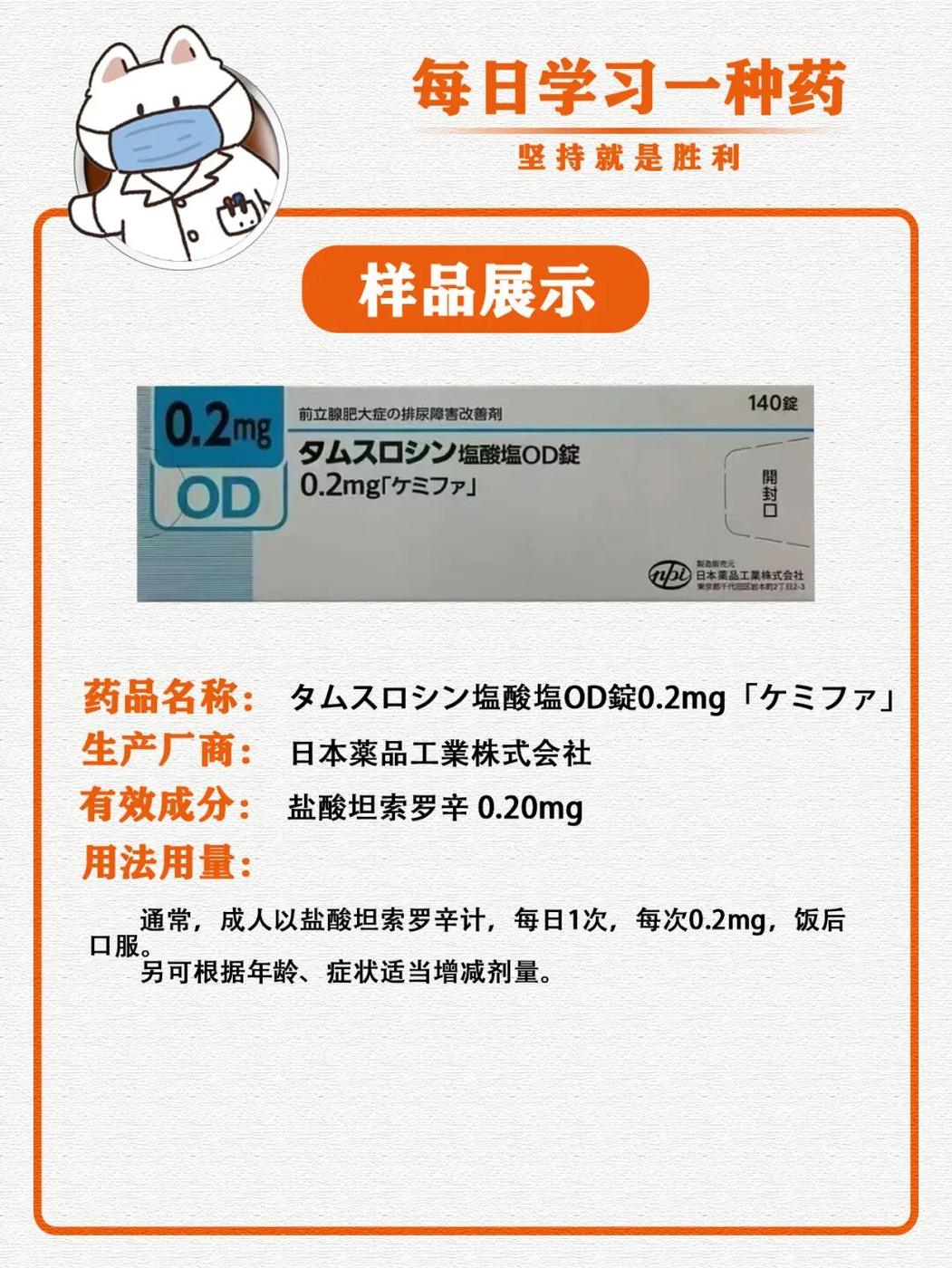
日本語原題:タムスロシン塩酸塩OD錠0.2mg「ケミファ」

Published2025-12-15 07:24 FormTablet Content9 sections / 2 images
English translation of the Japanese package insert is the main text; the Japanese original is shown alongside for verification. Use the language menu (top right) to read the page in another language. This site is for reference only — consult a doctor or pharmacist before use.
Section 1 · 01
English translation
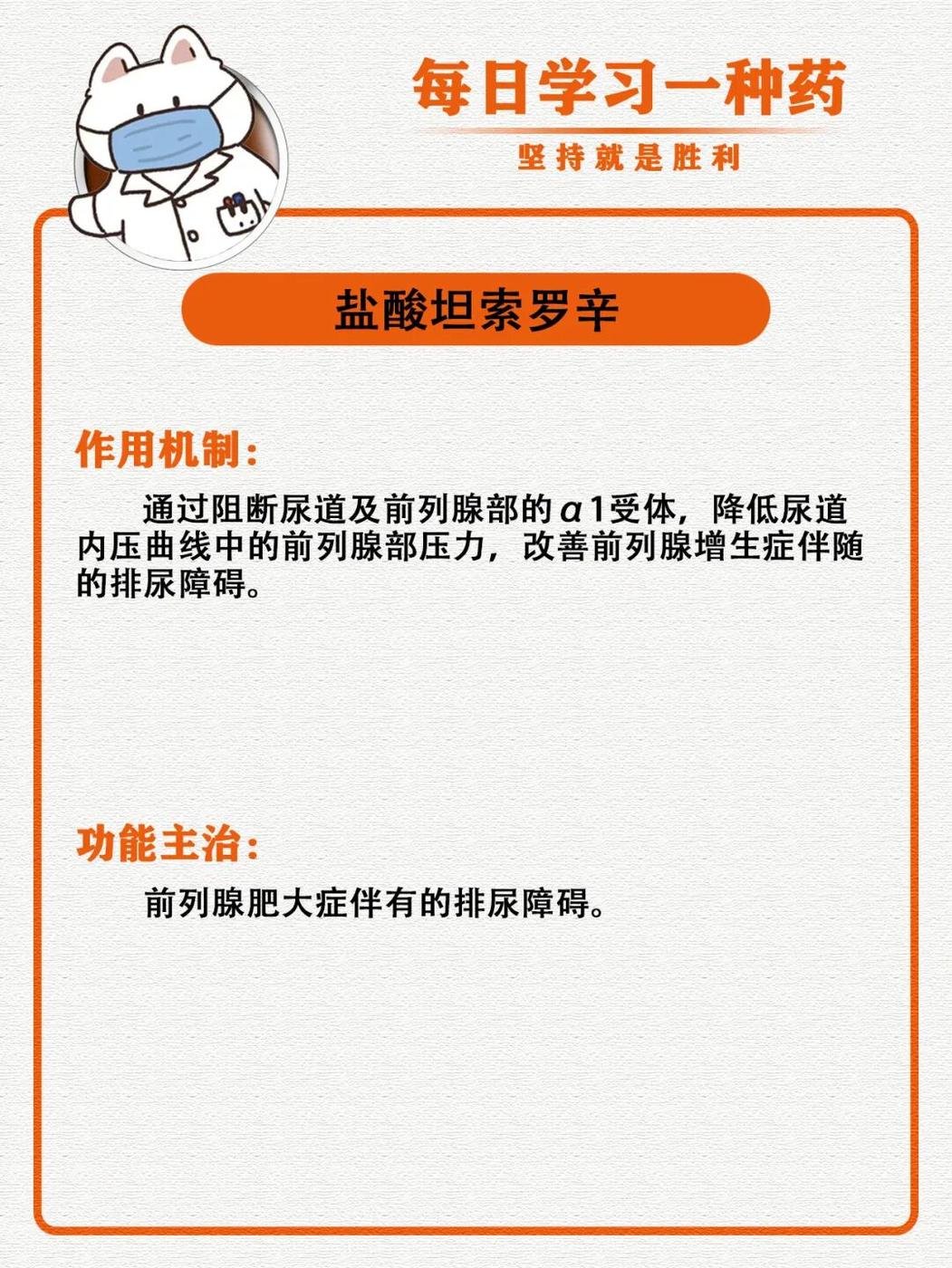
Feature Description By blocking α1 receptors in the urethra and prostate, the pressure in the prostate along the urethral pressure curve decreases, improving urination disorders associated with benign prostatic hyperplasia.
Section 2 · 02
English translation
Specifications 140 tablets [14 tablets (PTP)×10, with desiccant].
Section 3 · 03
English translation
Characteristics White plain tablets.
Section 4 · 04
English translation
Ingredient Information Active ingredient (per tablet) :(Japanese Bureau) Tamsulosin Hydrochloride 0.20mg. Additives: crystalline cellulose (granules), crystalline cellulose, hypromellose, ethyl cellulose, methacrylate copolymer LD, polysorbate 80, sodium lauryl sulfate, cetanol, ethyl acrylate, methyl methacrylate copolymer, polyoxyethylene nonylphenyl ether, D-mannitol, lactose hydrate, sucralose, calcium stearate, Synthetic aluminum silicate, hydroxypropyl starch, crospovidone.
Section 5 · 05
English translation
Indications Urinary disorders associated with benign prostatic hyperplasia.
Section 6 · 06
English translation
Dosage and Administration Typically, adults receive 0.2 mg of tamsulosin hydrochloride orally once daily after meals. Adjust appropriately according to age and symptoms.
Section 7 · 07
English translation
Notes 1. Overdose of this drug is expected to cause blood pressure reduction, so be cautious with the dosage. 2. Standing blood pressure may decrease, so be cautious of changes in blood pressure caused by changing positions. 3. Dizziness and other symptoms may occur, so caution is advised when engaging in hazardous work such as working at heights or driving a car. 4. At the start of this drug, conduct a medical examination regarding the presence or absence of antihypertensive drugs. If antihypertensive drugs are being administered, monitor blood pressure changes, and if blood pressure drops, take appropriate measures such as reducing the dose or discontinuing the medication.
Section 8 · 08
English translation
Side Effects 1. Fainting or loss of consciousness (frequency unknown) Transient loss of consciousness due to low blood pressure may occur. 2. Liver dysfunction and jaundice (both of unknown frequency) Elevated AST, ALT, jaundice, and other symptoms may occur. 3. Other side effects (1) Psychoneurological system: dizziness, dizziness, lightheadedness, headache, drowsiness, irritability, numbness. (2) Circulatory system: tachycardia, hypotension, orthostatic hypotension, palpitations, arrhythmia. (3) Hypersensitivity: rash, itching, urticaria, erythema multiforme, angioedema. (4) Digestive system: stomach discomfort, nausea, vomiting, stomach heaviness, stomach pain, loss of appetite, swallowing difficulties, dry mouth, constipation, diarrhea. (5) Others: burning sensation in the throat, general fatigue, nasal congestion, edema, urinary incontinence, taste disturbances, gynecomastia, priapism, ejaculation disorders, intraoperative hypotonia iris syndrome, blurred vision, visual impairment, hot flashes, heat sensation, burning sensation, chest discomfort.
Section 9 · 09
English translation
taboo Patients with a history of hypersensitivity to any component of this drug.

Source images

2 images

Need help sourcing Japanese medicines or OEM production?

💬