Ebastine
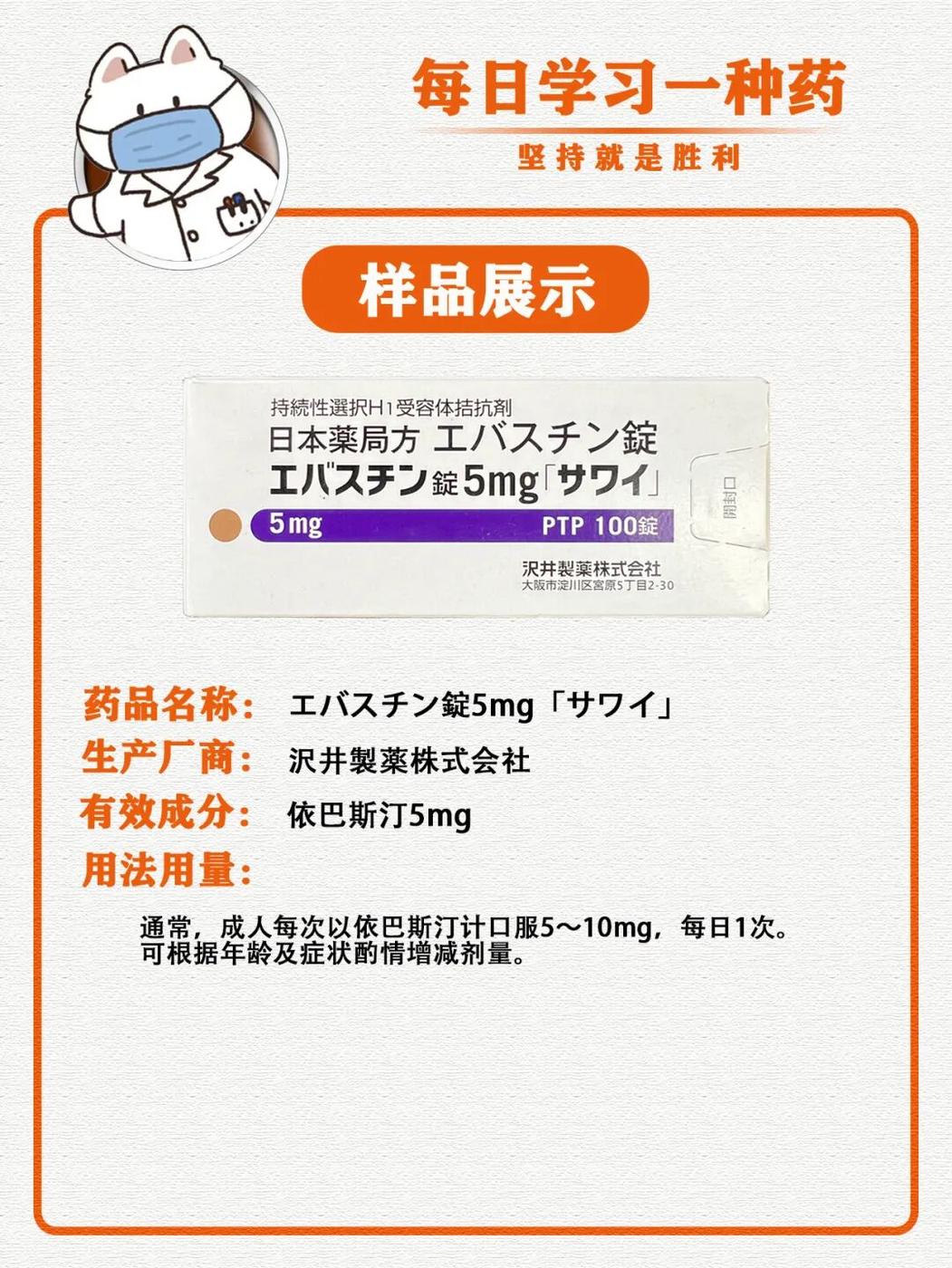
日本語原題:エバスチン錠5mg「サワイ」
Source images
2 imagesThe artwork keeps its original Japanese/Chinese lettering. Open “Text in this image” under a picture to read what it says in your language (machine-read, may contain errors).
Text in this image machine-read · may contain errors
Persistent Telemorphic H1 Receptor Antagonists Japanese Pharmacopoeia Ebastin Tablets Ebastin Tablets 5mg "Sawai" PTP 100 tablets Iseiso Co., Ltd. 5-2 and 30 Ayahara, Yodogawa-ku, Oban City Drug Name: Evastine Tablets 5mg "Sawai" Manufacturer: Active ingredients: Ebastine 5mg Dosage and administration: Typically, adults take 5~10mg orally at ebastine once daily. Dosage can be adjusted according to age and symptoms.
持性遥织H1受容体拮抗剂 日本薬局方エバスチン錠 エバスチン錠 5mg 「サワイ PTP100锭 井製藻株式会社 大版市淀川区窖原5丁目2·30 药品名称: エバスチン錠 5mg 「サワイ」 生产厂商: 有效成分: 依巴斯汀5mg 用法用量: 通常,成人每次以依巴斯汀计口服5~10mg,每日1次。 可根据年龄及症状酌情增减剂量。
Persistent Telemorphic H1 Receptor Antagonists Japanese Pharmacopoeia Ebastin Tablets Ebastin Tablets 5mg "Sawai" PTP 100 tablets Iseiso Co., Ltd. 5-2 and 30 Ayahara, Yodogawa-ku, Oban City …
Text in this image machine-read · may contain errors
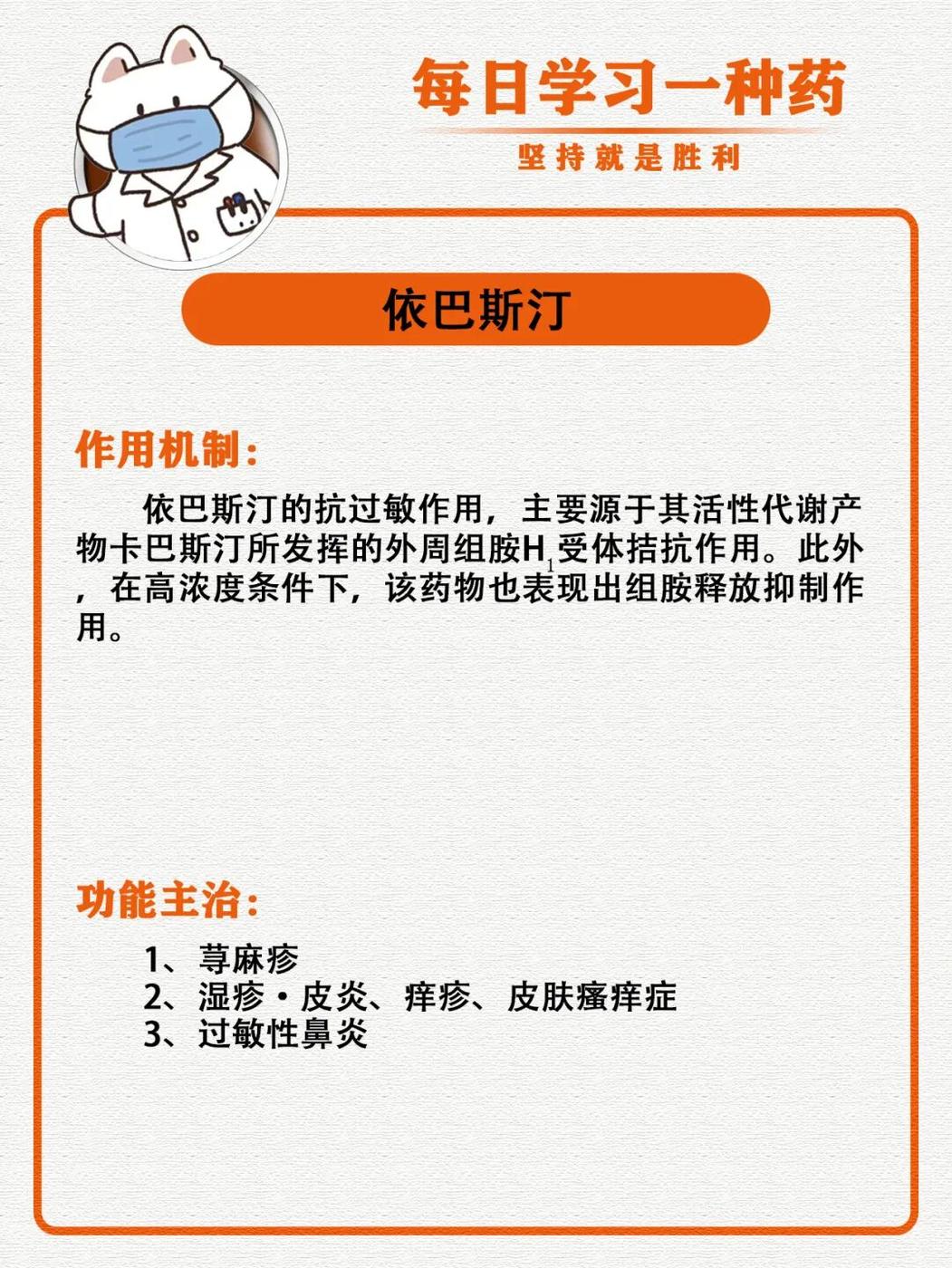
Mechanism of action: The anti-allergic effect of ebastine mainly comes from its active metabolites The peripheral histamine H receptor antagonist effect exerted by biocarbastin. In addition, At high concentrations, the drug also exhibits histamine release inhibition Functions and indications: 1. Measles 2. Eczema, dermatitis, prurigo, and pruritus 3. Allergic rhinitis Ibastine
作用机制: 依巴斯汀的抗过敏作用,主要源于其活性代谢产 物卡巴斯汀所发挥的外周组胺H受体拮抗作用。此外 在高浓度条件下,该药物也表现出组胺释放抑制作 功能主治: 1、尊麻疹 2、湿疹·皮炎、痒疹、皮肤瘙痒症 3、过敏性鼻炎 依巴斯汀
Mechanism of action: The anti-allergic effect of ebastine mainly comes from its active metabolites The peripheral histamine H receptor antagonist effect exerted by biocarbastin. In addition,…