Sarpogrelate
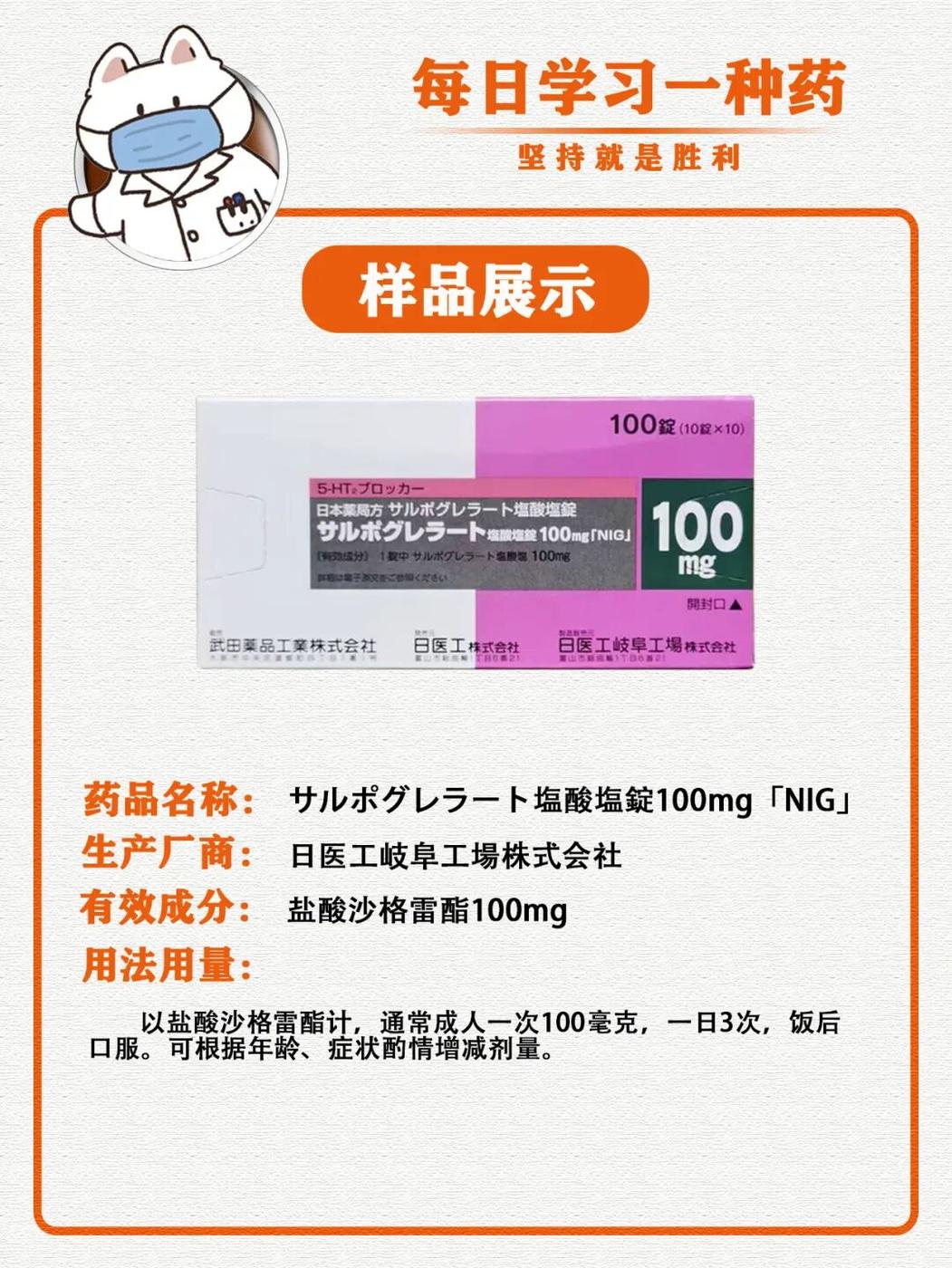
日本語原題:サルポグレラート塩酸塩錠100mg「NIG」
Each tablet contains 100mg of sulfogrelate hydrochloride.
Source images
2 imagesThe artwork keeps its original Japanese/Chinese lettering. Open “Text in this image” under a picture to read what it says in your language (machine-read, may contain errors).
Text in this image machine-read · may contain errors
100 ingots (10 lots ×10) Nichi Prescription Salpogrelate Hydrochloride Tablets Salpogreleratou 100" N Nichiiko Co., Ltd. Haku-Iko Gifu Factory Hayashi Company Takeda Vegetable Craft Co., Ltd. Drug Name: Sulfogrelate Hydrochloride Tablets 100mg "NIG" Manufacturer: Nichi-Iko Gifu Factory Co., Ltd. Active ingredients: Sagudogrel Hydrochloride 100mg Dosage and administration: Calculated as sagurecidate hydrochloride, adults usually take 100 mg per dose, three times a day, after meals. Oral. Dosage can be adjusted according to age and symptoms.
100锭(10签×10) 日局方サルポグレラート塩酸塩錠 サルポグレラートー 100 「 N 日医工株式会社 白医工岐阜工場林式会社 武田菜品工菜株式会社 药品名称: サルポグレラート塩酸塩錠 100mg 「 NIG 」 生产厂商: 日医工岐阜工場株式会社 有效成分: 盐酸沙格雷酯100mg 用法用量: 以盐酸沙格雷酯计,通常成人一次100毫克,一日3次,饭后 口服。可根据年龄、症状情增减剂量。
100 ingots (10 lots ×10) Nichi Prescription Salpogrelate Hydrochloride Tablets Salpogreleratou 100" N Nichiiko Co., Ltd. Haku-Iko Gifu Factory Hayashi Company Takeda Vegetable Craft Co., Ltd…
Text in this image machine-read · may contain errors
Saguret hydrochloride Mechanism of action: Saguterate hydrochloride is used for 5-hydroxy color in platelets and vascular smooth muscle The amine 2(5-HT2) receptor has a specific antagonistic effect, thereby exerting resistance Platelet action and vasoconstriction inhibitory. Functions and indications: Improves ulcers, pain, and coldness associated with chronic arterial occlusive disease Ischemic related symptoms.
盐酸沙格雷酯 作用机制: 盐酸沙格雷酯对血小板及血管平滑肌中的5-羟色 胺2(5-HT2)受体具有特异性拮抗作用,进而发挥抗 血小板作用及血管收缩抑制作用。 功能主治: 改善慢性动脉闭塞症伴发的溃疡、疼痛及冷感等 缺血性相关症状。
Saguret hydrochloride Mechanism of action: Saguterate hydrochloride is used for 5-hydroxy color in platelets and vascular smooth muscle The amine 2(5-HT2) receptor has a specific antagonisti…