Lomerizine
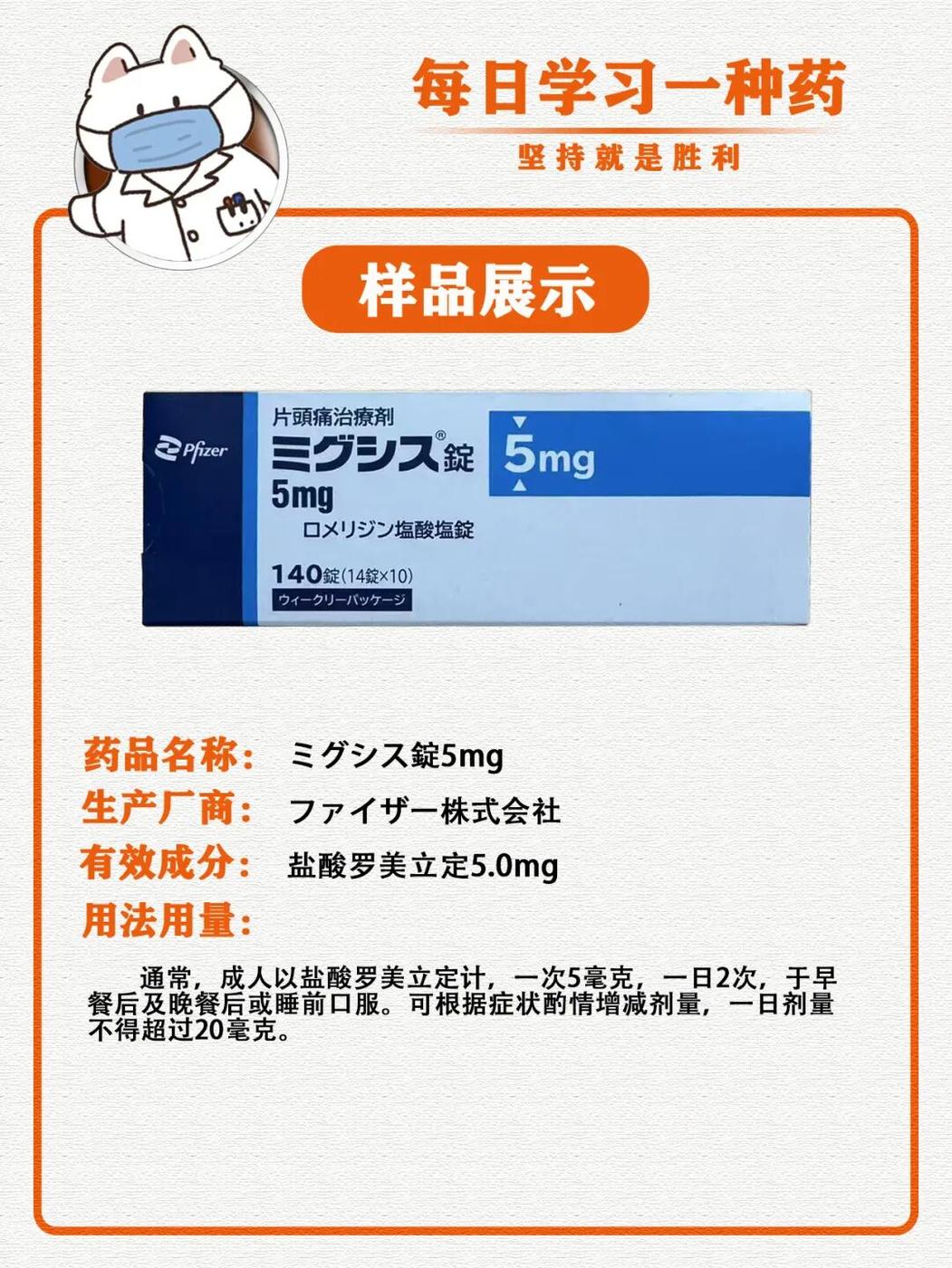
日本語原題:ミグシス錠5mg
Each tablet contains 5.0mg of Romeridin hydrochloride.
Source images
2 imagesThe artwork keeps its original Japanese/Chinese lettering. Open “Text in this image” under a picture to read what it says in your language (machine-read, may contain errors).
Text in this image machine-read · may contain errors
Migraine treatment 5mg Mixis tablets Romeridin hydrochloride tablets 140 ingots (14 ingots ×10) Drug name: Sanyou Tablet 5mg Manufacturer: 7 Knife Jewelry Co., Ltd Active ingredient: Romeilidine hydrochloride 5.0mg Dosage and administration: Typically, adults take Romeridine Hydrochloride at 5 mg per dose, twice daily, in the morning Take orally after meals, after dinner, or before bedtime. Dosage can be adjusted according to symptoms, with a daily dose Do not exceed 20 milligrams.
片頭痛治療劑 5mg ミクシス錠 ロメリジン塩酸塩錠 140锭(14锭×10) 药品名称:三又锭5mg 生产厂商:7刀个サ一株式会社 有效成分:盐酸罗美立定5.0mg 用法用量: 通常,成人以盐酸罗美立定计,一次5毫克,一日2次,于早 餐后及晚餐后或睡前口服。可根据症状酌情增减剂量,一日剂量 不得超过20毫克。
Migraine treatment 5mg Mixis tablets Romeridin hydrochloride tablets 140 ingots (14 ingots ×10) Drug name: Sanyou Tablet 5mg Manufacturer: 7 Knife Jewelry Co., Ltd Active ingredient: Romeili…
Text in this image machine-read · may contain errors
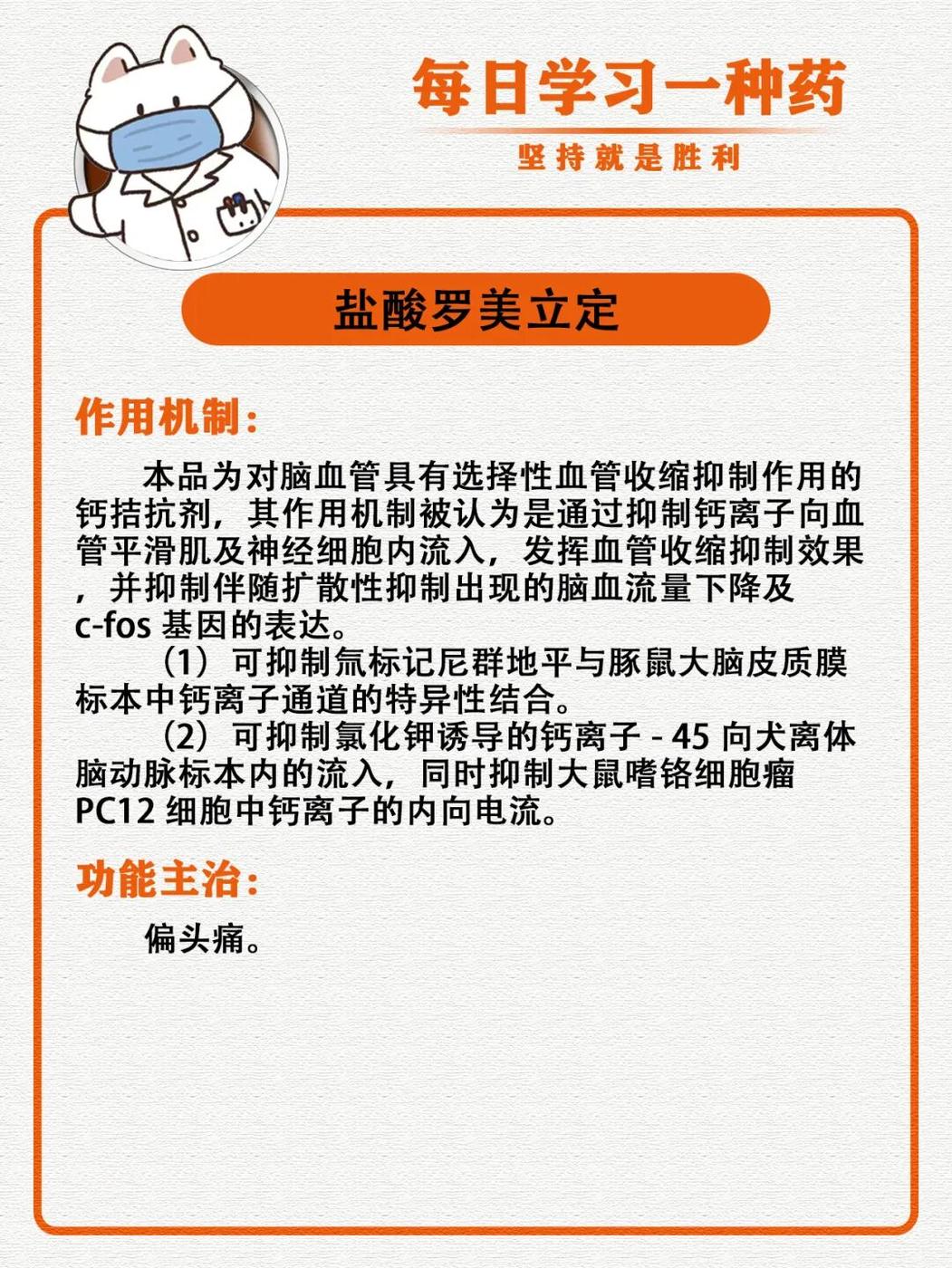
Romelitine hydrochloride Mechanism of action: This product has selective vasoconstrictive inhibitory effects on cerebral blood vessels Calcium antibodies, whose mechanism of action is believed to be by inhibiting calcium ions from entering the bloodstream Ducts flow into smooth muscle and nerve cells, exerting an inhibitory effect on vasoconstriction , and inhibits the cerebral blood flow decline that occurs with diffuse inhibition Expression of the c-fos gene. (1) It can inhibit xenon tagnidipine and the cerebral cortex membrane of guinea pigs Specific binding of calcium ion channels in specimens. (2) It can inhibit potassium chloride-induced calcium-45 dissociation into dogs Flow into cerebral artery specimens while inhibiting pheochromocytoma in rats Inward current of calcium ions in PC12 cells. Functions and indications: Migraine.
盐酸罗美立定 作用机制: 本品为对脑血管具有选择性血管收缩抑制作用的 钙抗剂,其作用机制被认为是通过抑制钙离子向血 管平滑肌及神经细胞内流入,发挥血管收缩抑制效果 ,并抑制伴随扩散性抑制出现的脑血流量下降及 c-fos基因的表达。 (1)可抑制氙标记尼群地平与豚鼠大脑皮质膜 标本中钙离子通道的特异性结合。 (2)可抑制氯化钾诱导的钙离子-45向犬离体 脑动脉标本内的流入,同时抑制大鼠嗜铬细胞瘤 PC12细胞中钙离子的内向电流。 功能主治: 偏头痛。
Romelitine hydrochloride Mechanism of action: This product has selective vasoconstrictive inhibitory effects on cerebral blood vessels Calcium antibodies, whose mechanism of action is believ…