Digestive · DIGESTIVE

Abemaciclib

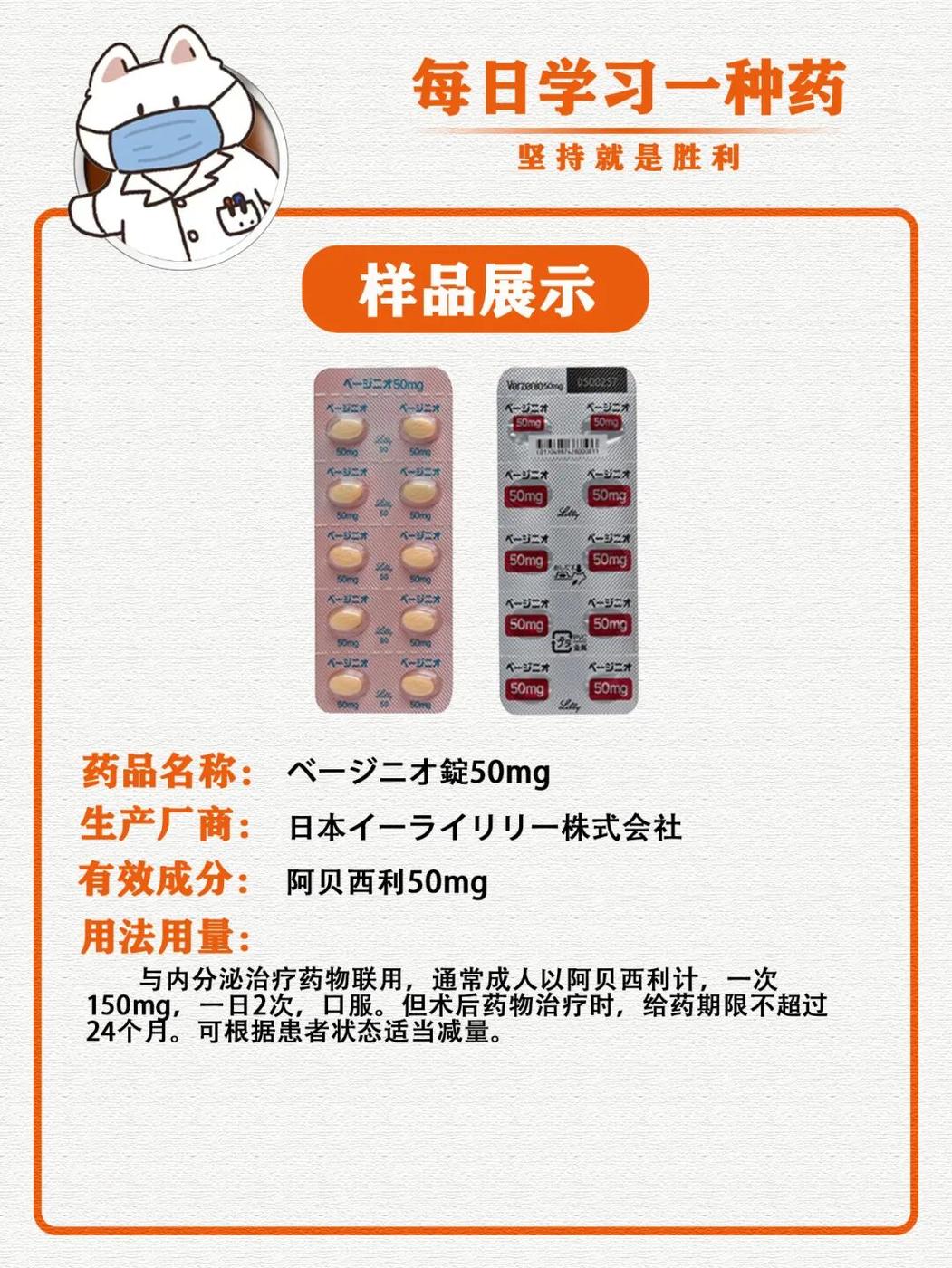
日本語原題:ベージニオ錠50mg

Published2026-03-06 09:14 FormTablet Content10 sections / 2 images
Ingredients / strength:
Each tablet contains 50mg of abemaciclib.
English translation of the Japanese package insert is the main text; the Japanese original is shown alongside for verification. Use the language menu (top right) to read the page in another language. This site is for reference only — consult a doctor or pharmacist before use.
Section 1 · 01
English translation
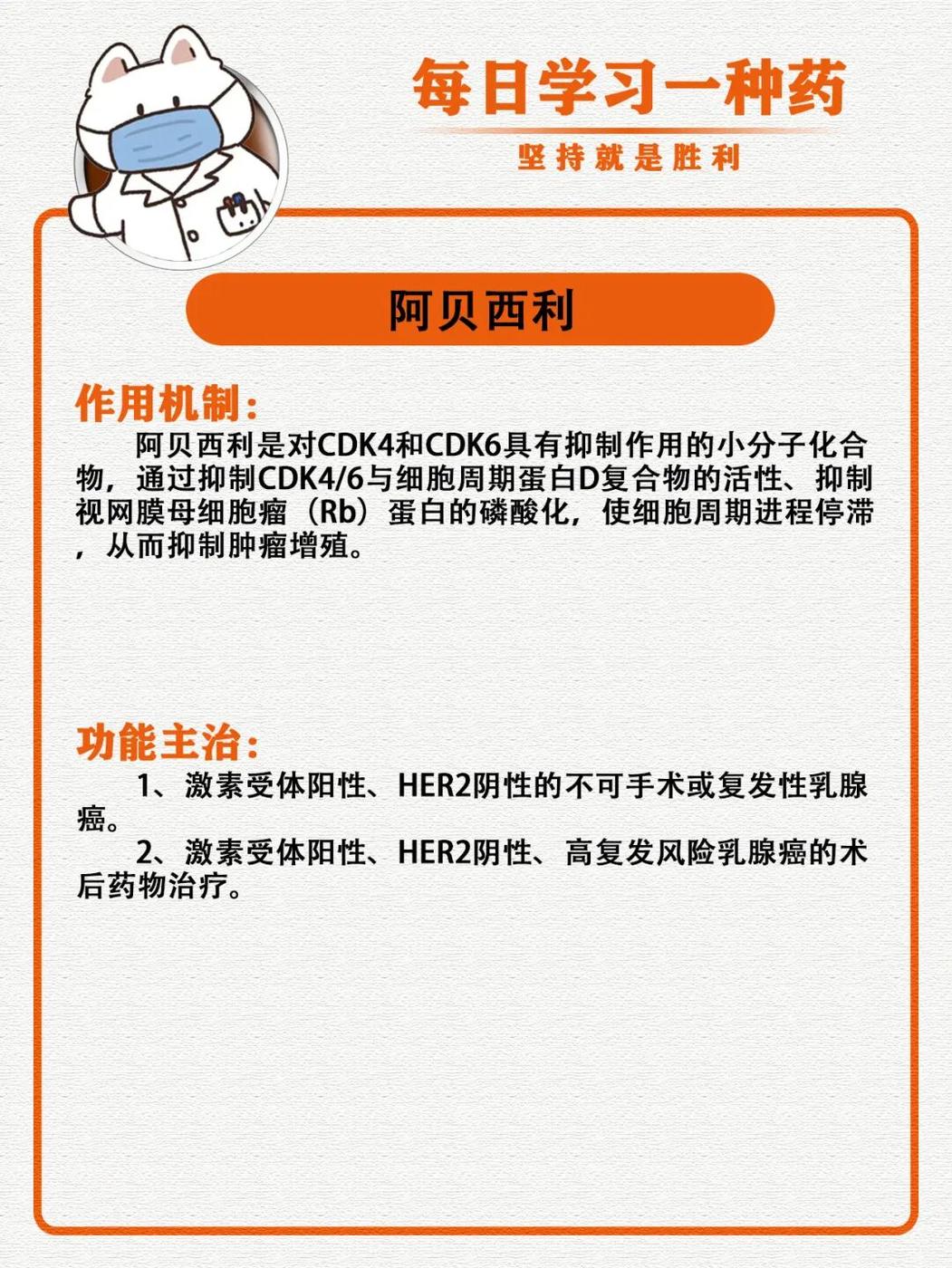
Feature Description Abemacyclib is a small molecule compound with inhibitory effects on CDK4 and 6, inhibiting the activity of the CDK4/6 and cyclin D complex, and by inhibiting phosphorylation of retinoblastoma (Rb) protein, it is thought to halt cell cycle progression and suppress tumor growth.
Section 2 · 02
English translation
30 tablets [10 tablets (blister packaging)×3].
Section 3 · 03
English translation
Characteristics A thin reddish-yellow film-coated lock.
Section 4 · 04
English translation
Ingredient Information Active ingredient: 50mg of Abemashicrib per tablet. Additives: crystalline cellulose, lactose hydrate, croscarmellose sodium, hydrated silicon dioxide, sodium stearyl fumarate, polyvinyl alcohol (partial sanoride), titanium oxide, macrogol 4000, talc, yellow ferric trioxide (only 50mg and 150mg tablets), ferric trioxide (only 50mg tablets).
Section 5 · 05
English translation
Indications 1. Inoperable or recurrent breast cancer that is hormone receptor-positive and HER2-negative 2. Postoperative Drug Therapy for Hormone Receptor-Positive and HER2-Negative Breast Cancer with High Risk of Recurrence
Section 6 · 06
English translation
Dosage and Administration In combination with endocrine therapy, adults are typically given 150 mg orally twice daily as abemacicliv. However, in the case of postoperative drug therapy, the administration period is limited to 24 months. Dose reduction is adjusted as needed depending on the patient's condition.
Section 7 · 07
English translation
Notes 1. Since liver dysfunction may occur, regular liver function tests should be performed before and during the start of administration of this drug to closely monitor the patient's condition. 2. Interstitial lung disease may occur, so pay attention to the following points. (1) Before starting administration, perform chest CT scans and medical interviews to confirm that there is no comorbidity or history of interstitial lung disease, and carefully decide whether to administer. Also, explain side effects to the patient and advise them to stop this drug and promptly seek medical attention if initial symptoms (such as difficulty breathing, cough, fever) appear. (2) During administration, carefully observe the patient's condition by confirming early symptoms, testing arterial oxygen saturation (SpO2), and performing chest X-rays. If abnormalities are detected, perform chest CT and other examinations in cooperation with physicians familiar with diagnosing respiratory diseases. 3. Since bone marrow suppression may occur, regular blood tests should be performed before and during administration of this drug to closely monitor the patient's condition.
Section 8 · 08
English translation
Side Effects 1. Liver dysfunction Liver dysfunction accompanied by increased ALT (8.1%) and AST (7.9%) may occur. 2. Severe diarrhea (7.5% note) 3. Bone marrow suppression Neutropenia (42.2%), leukopenia (32.0%), anemia (19.1%), thrombocytopenia (11.0%), lymphopenia (10.6%), and others may occur. 4. Interstitial lung disease (1.2%) If abnormalities are observed, stop medication, cooperate with a physician familiar with respiratory diseases, perform chest CT scans, and take appropriate measures. 5. Venous thromboembolism (1.7%) Venous thromboembolism may occur, such as deep vein thrombosis (0.7%) and pulmonary embolism (0.6%). Note: Grade 3 or higher side effects of NCI-CTCA E ver. 4.0 6. Other side effects (1) Digestive system: diarrhea, abdominal pain, nausea, vomiting, loss of appetite, stomatitis, indigestion, constipation, gastritis. (2) Respirator: coughing and difficulty breathing. (3) Cardiovascular system: hypertension. (4) Infections: upper respiratory tract infection, urinary tract infection, lung infection, nasopharyngitis, conjunctivitis, sinusitis, vaginal infection, pharyngitis, sepsis. (5) Skin: hair loss, rash, pruritus, dry skin, nail disorders, acne-like dermatitis. (6) Psychiatric and nervous system: floating dizziness, taste disturbances, depression. (7) Abnormal clinical test values: increased blood creatinine, hypokalemia, increased γ-GTP, hyperkalemia, hypocalcemia. (8) Others: fatigue, hot flashes, headache, increased tearing, weight loss, fatigue, fever, limb pain, peripheral edema, dry eyes, dehydration, muscle weakness, influenza-like illness, chills.
Section 9 · 09
English translation
taboo Patients with a history of severe hypersensitivity to any component of this drug.
Section 10 · 10
English translation
Warning 1. This drug should only be administered in cases where it is deemed appropriate to be administered under the care of a physician with sufficient knowledge and experience in cancer chemotherapy at a medical facility capable of handling emergencies. Also, before starting treatment, fully explain the efficacy and risks to the patient or their family, and only administer after obtaining consent. 2. Before starting administration of this drug, perform chest CT and other examinations and medical interviews to confirm the presence or history of interstitial lung disease, and carefully decide whether to administer the drug. 3. Interstitial lung disease has been reported in cases resulting in death, so it is important to closely monitor the patient's condition by checking for early symptoms (difficulty breathing, cough, fever, etc.), performing arterial oxygen saturation (SpO2) tests, and chest X-rays. If abnormalities are detected, immediately discontinue this medication and, in cooperation with a physician familiar with respiratory diseases, perform examinations such as chest CT scans and take appropriate measures. If interstitial lung disease caused by this drug is diagnosed, discontinue administration of this drug.

Source images

2 images

Need help sourcing Japanese medicines or OEM production?

💬