Urology & Kidney · URINARY

Bacillus Calmette-Guérin

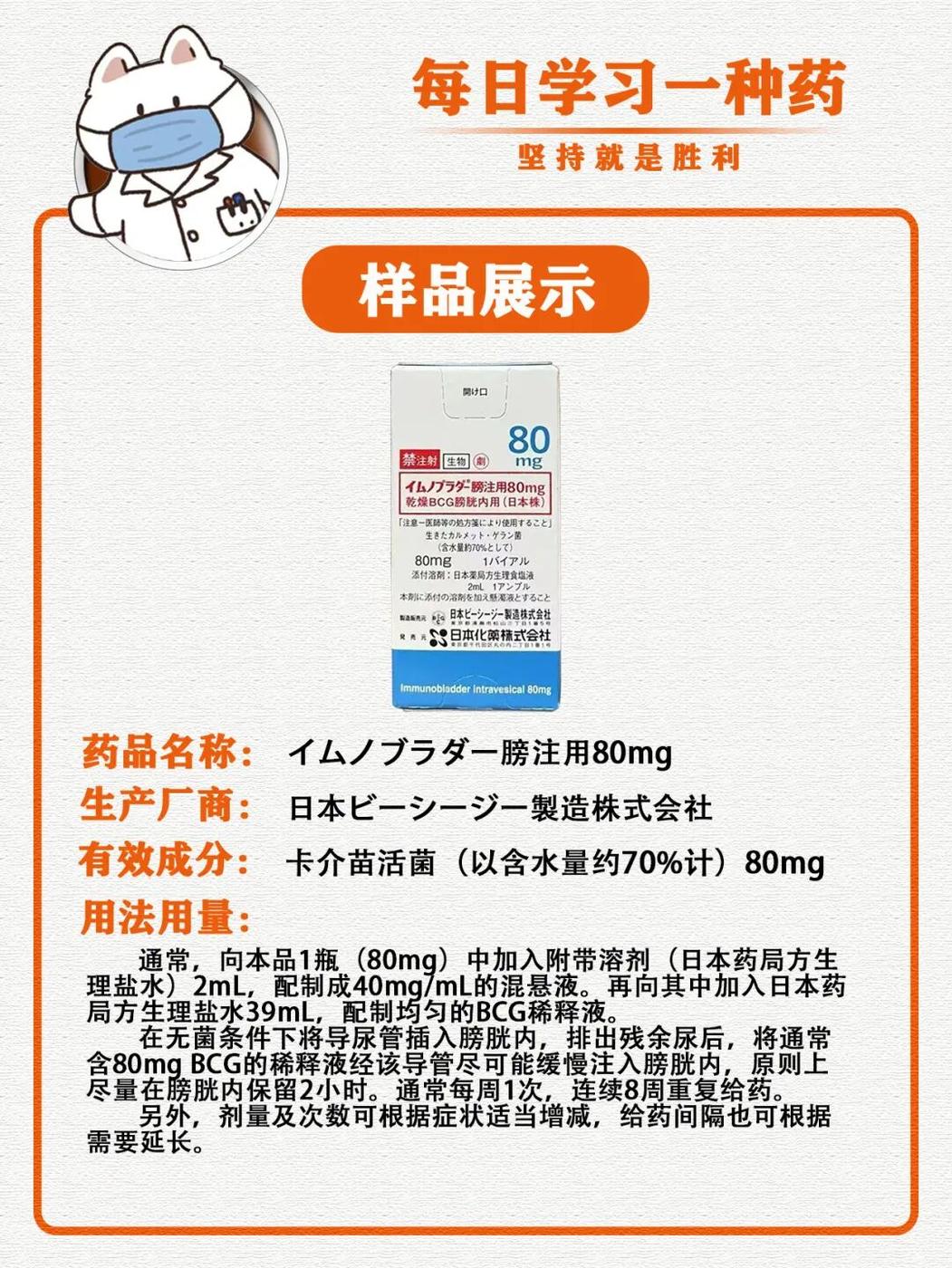
日本語原題:イムノブラダー膀注用80mg

Published2026-03-07 10:09 FormPowder Content10 sections / 2 images
Ingredients / strength:
Live Calmet Guerlain (approximately 70% moisture) 80 mg.
English translation of the Japanese package insert is the main text; the Japanese original is shown alongside for verification. Use the language menu (top right) to read the page in another language. This site is for reference only — consult a doctor or pharmacist before use.
Section 1 · 01
English translation
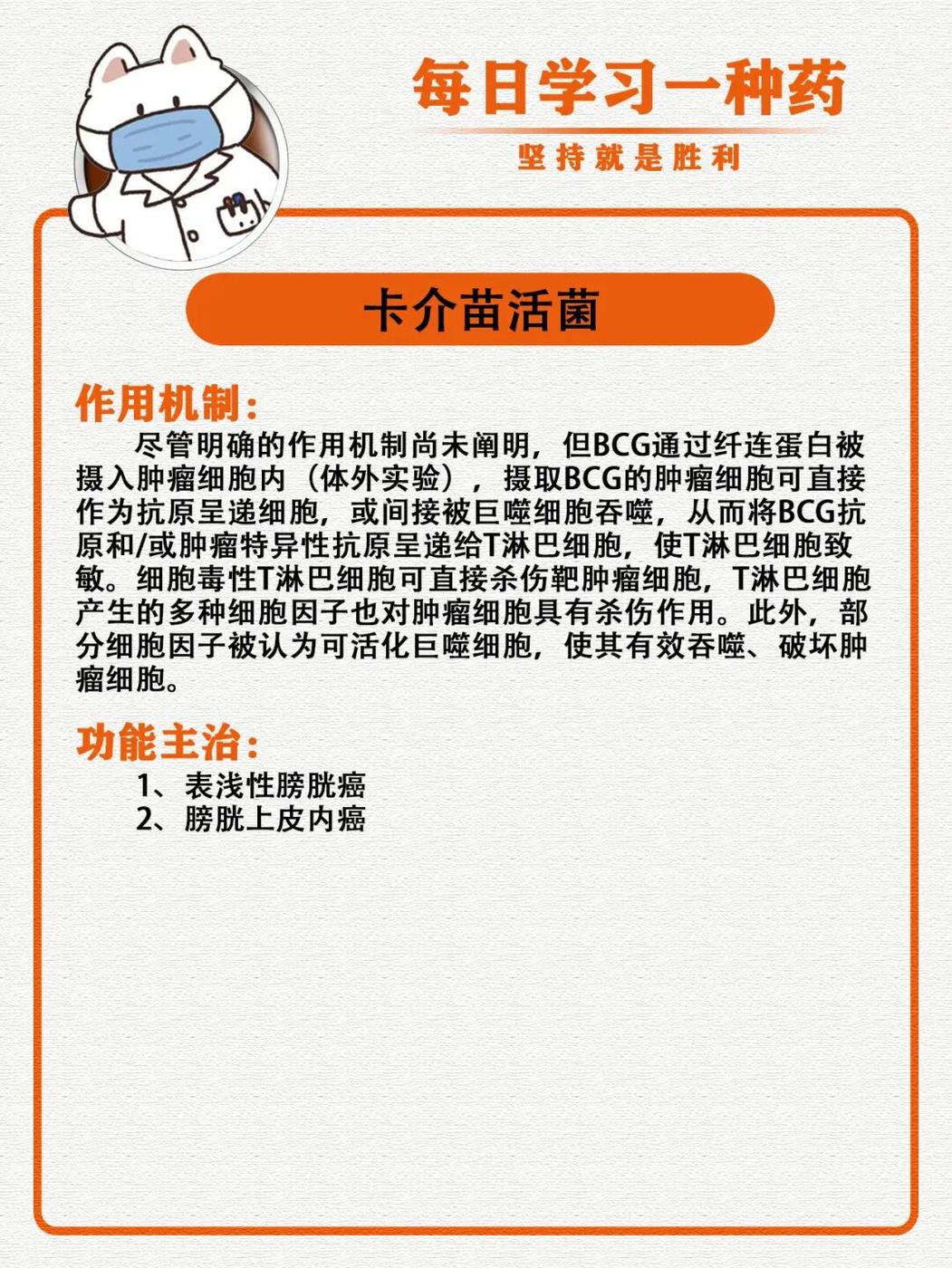
Feature Description Although the exact mechanism of action is not yet understood, BCG is incorporated into tumor cells via fibronectin (in vitro), and tumor cells that have incorporated BCG are either directly or indirectly phagocytosed by macrophages, presenting BCG and/or tumor-specific antigens to T lymphocytes, thereby establishing T lymphocyte sensitization. Cytotoxic T lymphocytes directly damage target tumor cells, and various cytokines produced by T lymphocytes also act destructively on tumor cells. Additionally, some cytokines are thought to activate macrophages, enabling effective phagocytosis and destruction of tumor cells.
Section 2 · 02
English translation
Specifications 80mg per vial. (Included solvent: Japanese Pharmacopoeia Physiological Saline Solution 2mL 1 ampoule)
Section 3 · 03
English translation
Characteristics It is a dry formulation. When the accompanying solvent is added, it becomes a cloudy white or pale yellow liquid.
Section 4 · 04
English translation
Ingredient Information (1) Active ingredient: 80mg of live Calumet Guerlain bacteria (approximately 70% moisture). (2) Additives: 140mg of monosodium glutamate hydrate. (3) Attached solvent: 2mL of Japanese Pharmacopoeia physiological saline.
Section 5 · 05
English translation
1. Superficial bladder cancer 2. Intraepithelial carcinoma of the bladder
Section 6 · 06
English translation
Dosage and Administration Typically, one vial (80 mg) of this product is treated as a 40 mg/mL suspension by adding 2 mL of the accompanying solvent (Japanese Pharmacopoeia physiological saline). Add 39mL of Japanese Pharmacopoeia physiological saline to prepare a uniform BCG dilution. A urethral catheter is inserted into the bladder under sterile conditions, and after residual urine is expelled, a diluted solution containing 80 mg BCG is injected as slowly as possible from the catheter, generally held in the bladder for 2 hours. This process is usually repeated once a week for eight weeks. The dosage and number of doses should be adjusted appropriately according to symptoms, and the dosing interval may be extended as needed.
Section 7 · 07
English translation
Notes 1. When using this drug, thoroughly explain and understand the patient's condition, usage method and administration period, expected side effects, and the necessity of reporting to the attending physician if any problematic side effects occur before use. 2. When administering this drug, be careful not to damage the urinary tract mucosa and to avoid contaminating the urinary system. 3. After each injection of this drug, patients must be monitored for the presence and severity of subjective symptoms caused by side effects. 4. Patients should be alert to side effects such as fever, chills, fatigue, flu-like symptoms, or increased fatigue, and if these symptoms or serious urinary side effects appear, such as burning sensation, painful urination, urinary urgency, frequent urination, joint pain, cough, rash, etc., patients should be instructed to report immediately to their doctor. 5. It is desirable to perform a tuberculin reaction test prior to starting use of this drug. 6. During the first urination after injection, urination should be done while sitting to ensure sufficient urination, and to avoid accidents caused by dizziness, it is advisable to avoid standing up suddenly. Also, after injecting this drug, the first urination should be collected in an appropriate container (such as a urine storage container), disinfected to prevent BCG infection, and then discarded.
Section 8 · 08
English translation
Side Effects 1. BCG infection This drug is a live bacterial preparation and may cause disseminated BCG infection, localized BCG infection, and ectopic BCG infection. Additionally, sepsis, hepatitis, meningitis, cystitis, pyelonephritis, nephritis, prostatitis, epididymitis, aneurysms, and others may also occur. If such symptoms appear, discontinue administration of this drug, provide appropriate treatment, and begin combination therapy with antituberculosis agents such as isoniazid, rifampicin, or ethambutol. BCG does not show sensitivity to pyrazinamide. (1) Disseminated BCG infection (frequency unknown) In clinical trials of this drug, deaths believed to be caused by BCG administration following trauma caused by catheter insertion or similar methods have been observed. Influenza-like fever symptoms lasting more than 48 hours, fever above 39°C, systemic symptoms worsening with repeated administration, or persistent abnormal liver function test values suggest disseminated BCG infection. (2) Focal BCG infection BCG infections have been reported in the bladder (2.0%) and lumen, including the prostate (0.5%), ureter (frequency unknown), renal pelvis (frequency unknown), kidney (frequency unknown), epididymis (frequency unknown), and other sites of administration. (3) Ectopic BCG infection (frequency unknown) Ectopic BCG infections in aneurysms and other cases have been reported. 2. Interstitial pneumonia (frequency unknown) During administration of this drug, severe interstitial pneumonia may occur, including cases of death accompanied by chest X-ray abnormalities and hypoxemia, along with subjective symptoms such as fever, cough, and difficulty breathing. In such cases, discontinue administration of this drug and promptly take appropriate measures such as steroid administration. However, if differentiation from disseminated BCG infection is difficult, it is desirable to administer anti-tuberculosis drugs along with steroids. 3. Systemic delayed hypersensitivity reactions (frequency unknown) In clinical trials of this drug, there have been cases of death believed to be caused by anaphylaxis accompanied by cough and rash. If side effects suspected to be systemic delayed-type hypersensitivity reactions occur, discontinue administration of this drug and immediately begin treatment with antihistamines or steroids along with anti-tuberculosis drugs. 4. Bladder atrophy (frequency unknown) 5. Renal insufficiency (frequency unknown) Severe kidney damage such as renal failure may occur. 6. Reiter's syndrome (conjunctivitis, polyarthritis, etc.) (frequency unknown) 7. Other side effects (1) Urinary tract notes: painful urination (57.6%), frequent urination (56.6%), gross hematuria (29.3%), cloudy urine (21.2%), decreased bladder volume (18.7%), difficulty urinating (15.2%), urine sediment (white blood cells) (59.1%), urine sediment (red blood cells) (38.1%), urinary protein (29.8%), urine occult blood (28.7%), urine glucose (10.1%), urethral pain, feeling of residual urine, Bladder tamponade (due to bladder hematoma), urethral stricture, and urge urinary incontinence. (2) Genitals: Penile edema. (3) Kidneys: Increased serum creatinine and BUN. (4) Liver: abnormal liver function test values [elevated Al-P, AST, ALT, γ-GTP, LDH], liver dysfunction. (5) Blood: increase or decrease in white blood cell count (17.5%), abnormal erythrocyte sedimentation rate (14.1%), increase or decrease in red blood cell count, decrease in hemoglobin, decrease in hematocrit, decrease in platelet count, decreased total serum protein, abnormal serum electrolytes [Na, K, Cl]. (6) Skin: hives, rashes, skin rashes. (7) Neuropsychiatric system: fatigue, headache, heaviness in the head. (8) Respirator: pneumonia, cough. (9) Gastrointestinal: nausea, loss of appetite, stomatitis, bleeding, vomiting, diarrhea due to stress-induced gastric ulcers. (10) Fever: Fever (33.8%), chills, and a sensation of body heat. (11) Others: joint pain, lower abdominal pain, heavy pressure in the lower abdomen, exhaustion, weakness, lower back pain, muscle pain, swollen lymph nodes in the groin, conjunctivitis.
Section 9 · 09
English translation
taboo 1. Patients in immunosuppressed states due to complications such as AIDS, leukemia, malignant lymphoma, or patients with congenital or acquired immunodeficiency [not only may immune response to this drug be reduced, but there is also a risk of disseminated BCG infection. ] 2. HIV-carrier patients [Not only may immune response to this drug be reduced, but there is also a risk of disseminated BCG infection. ] 3. Patients with obvious active tuberculosis [may cause serious side effects. ] 4. Patients with febrile illness, urinary tract infections, or gross hematuria [may cause serious side effects]. ] 5. Pregnant women or women who may be pregnant 6. Patients with a history of BCG systemic hypersensitivity reactions [there is a risk of serious side effects.] ] 7. Patients receiving immunosuppressants or corticosteroids at immunosuppressive doses 8. Patients undergoing anticancer therapy (e.g., cytotoxic drug therapy, radiation irradiation)
Section 10 · 10
English translation
Warning 1. In clinical trials of this drug, deaths believed to be caused by disseminated BCG infection following BCG administration after trauma caused by catheter insertion have been observed, and similar cases have been reported in the United States. Therefore, this drug should not be administered immediately after trauma caused by transurethral bladder tumor resection (TURBT), biopsy, or catheterization. Instead, it should be administered at intervals of 7 to 14 days while monitoring the healing status of the trauma. Also, administration of this drug should only be done in cases where it is deemed appropriate for medical facilities capable of emergency treatment and under physicians with sufficient experience in treating bladder cancer. 2. Clinical trials of this drug have reported deaths believed to be caused by anaphylaxis accompanied by cough and rash; if such symptoms appear, administration of this drug should be discontinued immediately, and anti-tuberculosis treatment along with antihistamines or steroids is necessary. 3. This product is a live bacterial formulation, and since there have been reports of hospital-acquired infections in the United States, please handle with great caution and appropriateness.

Source images

2 images

Need help sourcing Japanese medicines or OEM production?

💬