Musculoskeletal · MUSCULOSKELETAL

Celecoxib

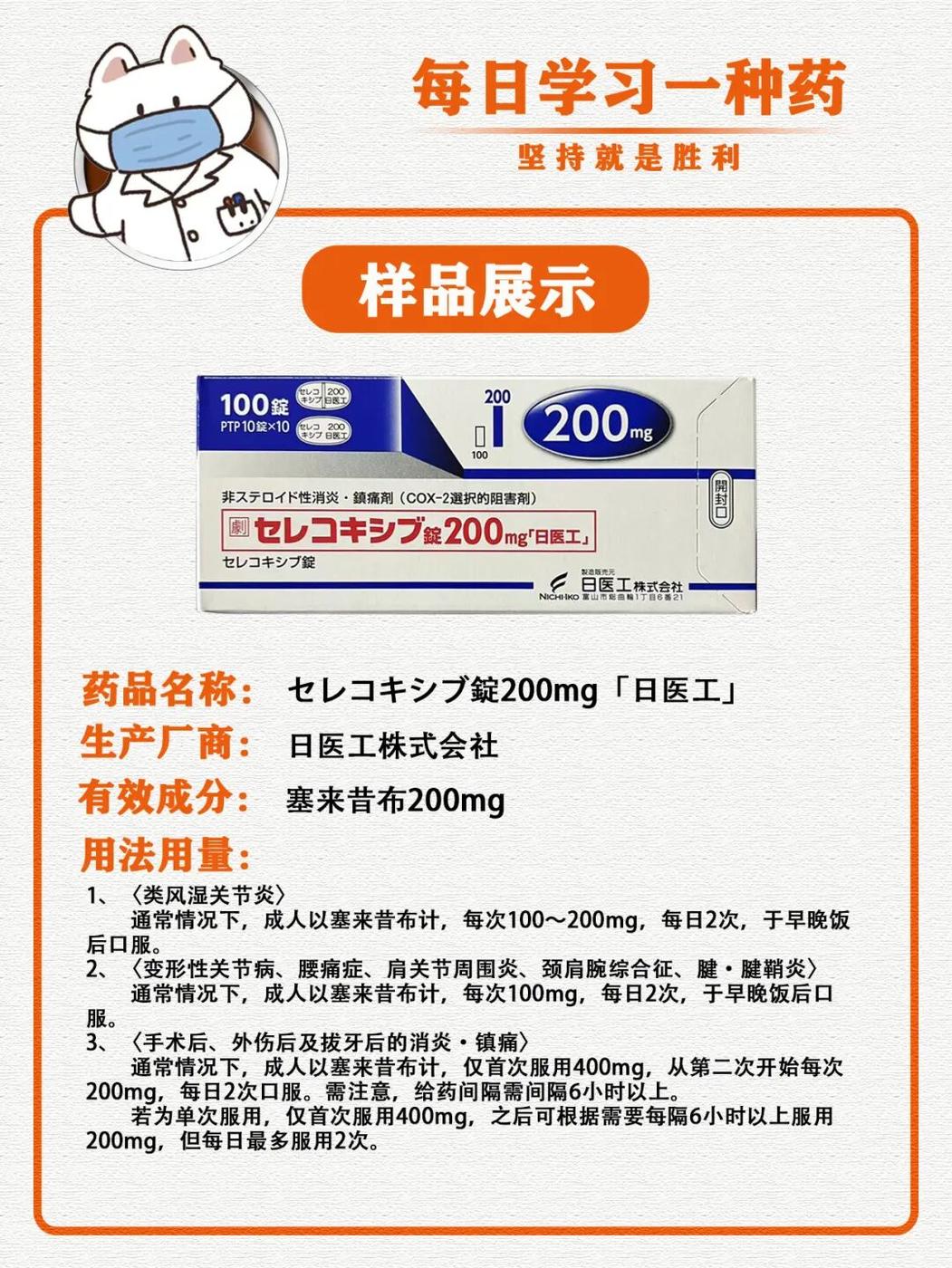
日本語原題:セレコキシブ錠200mg「日医工」

Published2026-05-01 12:31 Maker日医工 FormTablet Content10 sections / 2 images
Ingredients / strength:
Each tablet contains 200mg of celecoxib.
English translation of the Japanese package insert is the main text; the Japanese original is shown alongside for verification. Use the language menu (top right) to read the page in another language. This site is for reference only — consult a doctor or pharmacist before use.
Section 1 · 01
English translation
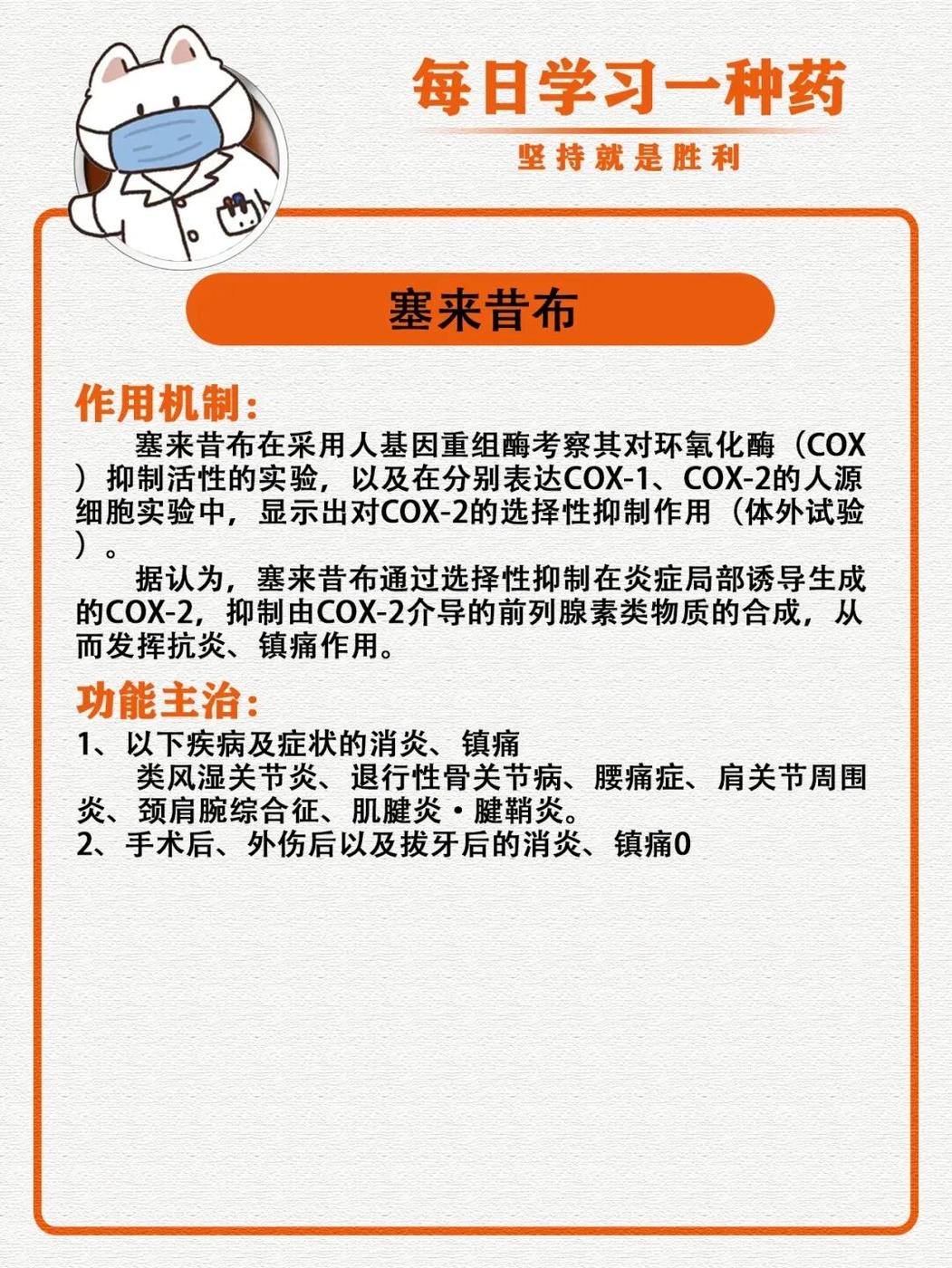
Feature Description Celecoxib demonstrated selective inhibitory effects against COX-2 in experiments using human recombinant enzymes to investigate its inhibitory activity against cyclooxygenase (COX) and experiments using human-derived cells expressing COX-1 and COX-2 respectively (in vitro trials). Celecoxib is thought to exhibit anti-inflammatory and analgesic effects by selectively inhibiting COX-2 induced in inflammatory sites and suppressing the synthesis of COX-2-derived prostaglandins.
Section 2 · 02
English translation
100 tablets [10 tablets×10; PTP packaging].
Section 3 · 03
English translation
Characteristics White, oval-shaped plain tablet with a seced line.
Section 4 · 04
English translation
Ingredient Information Active ingredient: 200mg celecoxib per tablet. Excipients: D-mannitol, low-substitution hydroxypropyl cellulose, hydroxypropyl cellulose, magnesium stearate, and one other ingredient.
Section 5 · 05
English translation
Indications 1. Anti-inflammatory and analgesic relief for the following diseases and symptoms Rheumatoid arthritis, osteoarthritis, lower back pain, periarthritis of the shoulder, cervical-shoulder-brachial syndrome, tendon and tenosynovitis. 2. Anti-inflammatory and analgesic treatment after surgery, trauma, and tooth extraction
Section 6 · 06
English translation
Dosage and Administration 1. Rheumatoid arthritis Typically, adults receive oral administration of 100~200 mg of celecoxib twice daily, after breakfast and dinner. 2. 〈Osteoarthritis, lower back pain, periarthritis of the shoulder, cervical-shoulder-arm syndrome, tendon/tenosynovitis〉 Typically, adults receive 100 mg of celecoxib orally twice daily, after breakfast and dinner. 3. Anti-inflammatory and analgesic treatment after surgery, trauma, and tooth extraction. Typically, adults receive an initial dose of 400 mg as celecoxib, and from the second dose onward, 200 mg per dose, twice daily orally. The interval between doses should be at least 6 hours. For instant administration, 400 mg is administered orally only the first time, and if necessary, 200 mg is administered orally after at least 6 hours of intervals. However, this is limited to two times per day.
Section 7 · 07
English translation
Notes 1. When using this drug, limit the minimum effective dose to the shortest possible duration and avoid indiscriminate administration over extended periods. 2. Administration of this drug may cause severe and sometimes fatal cardiovascular thromboembolic events such as myocardial infarction and stroke; therefore, closely monitor and pay close attention to the onset of these signs and symptoms. 3. This drug does not act on platelets, so it should not be used as a substitute for aspirin for the purpose of preventing cardiovascular diseases. Patients receiving antiplatelet therapy must not be discontinued with administration of this drug. 4. In clinical trials conducted domestically on patients, no difference was found in the incidence of gastrointestinal side effects between this drug, which is highly selective for COX-2, and nonsteroidal anti-inflammatory and analgesic drugs with low selectivity. In particular, when administering to patients with a high risk factor for gastrointestinal disorders, thorough monitoring of the occurrence of side effects should be performed. [See 18.3] 5. Liver failure, hepatitis, elevated AST, ALT, bilirubin, etc., and jaundice have been reported, so regular liver function tests and other monitoring should be performed. 6. Severe kidney damage such as acute kidney injury and interstitial nephritis has been reported, so regular renal function tests and other monitoring should be performed. 7. Administration of this drug may cause severe and sometimes fatal skin symptoms such as toxic epidermal necrolysis (TEN) and cutaneous mucous membrane syndrome (Stevens-Johnson syndrome), which often manifest within one month of starting administration, so special caution is required during the initial treatment phase. 8. When using this drug for chronic diseases (rheumatoid arthritis, osteoarthritis, etc.), consider the following points. (1) Perform clinical examinations (urine tests, blood tests, kidney function tests, liver function tests, electrocardiograms, fecal occult blood tests, etc.) as needed or necessary. (2) Note that treatment with anti-inflammatory and analgesic drugs is symptomatic therapy, not causal therapy. Also, consider therapies other than drug therapy. 9. When using this drug for acute diseases (post-surgery, post-trauma, and post-extraction anti-inflammatory and analgesic relief), consider the following: (1) Administer considering the degree of acute inflammation and pain. (2) As a general rule, avoid long-term administration. (3) If causal therapy is available, perform it and do not administer this drug indiscriminately. (4) Note that the initial dose differs from the second and subsequent doses, and thoroughly explain the method of administration to the patient. 10. Due to the pharmacological effects reported with this drug, there is a risk of asymptomatic infections; thus, be cautious and carefully monitor the onset of infection. 11. Floating vertigo, rotational vertigo, and drowsiness may occur, so caution is advised when engaging in hazardous work such as driving a vehicle.
Section 8 · 08
English translation
Side Effects 1. Shock, anaphylaxis (both with unknown frequency) Severe hypersensitivity such as shock, anaphylaxis, dyspnea, angioedema, vasculitis, and bronchospasm has been reported. 2. Peptic ulcers (0.2%), gastrointestinal bleeding (less than 0.1%), gastrointestinal perforation (frequency unknown) If symptoms such as vomiting blood or melena (melena) appear, discontinue administration and take appropriate measures. 3. Myocardial infarction and stroke (both of unknown frequency) Severe and sometimes fatal cardiovascular thromboembolic events such as myocardial infarction and stroke have been reported. 4. Heart failure and congestive heart failure (both frequency unknown) 5. Liver failure, hepatitis (both frequency unknown), liver dysfunction (less than 0.1%), jaundice (frequency unknown) Liver failure, hepatitis, elevated AST, ALT, bilirubin, etc., and jaundice have been reported. 6. Aplastic anemia, pancytopenia, agranulocytosis (frequency unknown for all cases) Manifestations of aplastic anemia, pancytopenia, agranulocytosis, leukopenia, and thrombocytopenia have been reported. 7. Acute renal injury, interstitial nephritis (both frequency unknown) Severe kidney damage such as acute kidney injury and interstitial nephritis has been reported. 8. Toxic epidermal necrolysis (TEN), Stevens-Johnson syndrome, erythema multiforme, acute generalized exanthematous pustulosis, exfoliative dermatitis (all of unknown frequency) Severe and sometimes fatal skin symptoms such as toxic epidermal necrolysis, cutaneous mucosal eye syndrome, erythema multiforme, acute generalized experiential pustulosis, and exfoliative dermatitis have been reported. Therefore, if rash, mucosal lesions, or other hypersensitivity signs appear, discontinue administration immediately and take appropriate treatment. 9. Interstitial pneumonia (frequency unknown) If cough, difficulty breathing, fever, or abnormal lung sounds (twisting sounds) are observed, promptly perform chest X-ray, chest CT, serum markers, and other tests. If interstitial pneumonia is suspected, discontinue administration and take appropriate measures such as administering corticosteroids. 10. Other side effects (1) Systemic symptoms: fatigue, dry mouth, peripheral edema, severe cold, generalized edema, fatigue, hot flashes, weight gain, and influenza-like illness. (2) Neuropsychiatric system: somnolence, headache, floating dizziness, taste disturbances, intoxication, postural dizziness, sensory dullness, decreased level of consciousness, insomnia, sleep disorders, confusion, anxiety, hallucinations, increased muscle tone, loss of smell. (3) Hepatobiliary system: increased ALT, increased AST, increased γ-GTP, increased Al-P, increased blood bilirubin, positive urinary urobilinogen. (4) Compensation & Nutrition: Increased BUN, increased CK, loss of appetite, increased LDH, positive urine sugar, diabetes, increased blood potassium, increased blood sodium. (5) Gastrointestinal: abdominal pain, stomatitis, diarrhea, positive fecal occult blood, nausea, bloating, indigestion, constipation, gastritis, dry mouth, tongue disorders, vomiting, erosion at the corners of the mouth, abdominal distension, upper abdominal pain, stomach discomfort, gastrointestinal disorders, glossitis, oral pain, esophagitis, numbness in the mouth, aphthous stomatitis, oral mucosal blister formation, epigastric discomfort, gastroenteritis, tooth loss, oral ulcers, swallowing disorders, gastroesophageal reflux disease, pancreatitis, diverticula, irritable bowel syndrome, Hemorrhoid bleeding and increased frequency of bowel movements. (6) Urinary system: increased β2-microglobulin, increased NAG, positive urinary occult blood, positive urinary protein, polyuria, urinary retention, frequent urination, renal dysfunction, kidney stones, benign prostatic hyperplasia, prostatitis, increased PSA, increased blood creatinine. (7) Cardiovascular system: hypertension, flushing, palpitations, exacerbation of hypertension, circulatory collapse, arrhythmia, tachycardia, sinus bradycardia, angina, unstable angina, aortic valve insufficiency, coronary arteriosclerosis, ventricular hypertrophy, deep vein thrombosis, hematoma. (8) Respiratory: pharyngitis, nosebleeds, nasopharyngitis, bronchitis, cough, rhinitis, sinusitis, dyspnea, voice disorders. (9) Skin: rash, pruritus, facial edema, erythematous rash, eczema, urticaria, drug eruption, petechicolor, maculopapuloid rash, dry skin, pityriasis on the scalp, hyperhidrosis, dermatitis, erythema, petechia, photosensitivity reactions, alopecia, bullous dermatitis. (10) Sensory organs: tinnitus, rotating vertigo, ear pain, fog vision, pruritus, vitreous floaters, conjunctival hemorrhage, hearing loss. (11) Others: back pain, muscle stiffness, joint pain, limb pain, abnormal uterine bleeding, menstrual disorders, viral infections, bacterial enteritis, neck pain, anemia, decreased hematocrit, increased hemoglobin, fungal infections, bacterial infections, Helicobacter infections, urinary tract infections, upper respiratory tract infections, ear infections, shingles, erysipelas, wound infections, gum infections, labyrinthitis, allergic exacerbations, aseptic meningitis, muscle spasticity, lipomas, ganglion, vaginal bleeding, Breast tenderness, ovarian cysts, menopausal symptoms, decreased blood testosterone, epicondylitis (epicondylitis), tendon rupture, fractures, injuries.
Section 9 · 09
English translation
taboo 1. Patients with a history of hypersensitivity to any component of this drug or sulfonamide 2. Patients with aspirin-induced asthma (asthma attacks induced by nonsteroidal anti-inflammatory drugs or analgesics) or a history of this [may induce severe asthma attacks]. ] 3. Patients with peptic ulcers [Risk of worsening peptic ulcers] There is. ] 4. Patients with severe liver impairment 5. Patients with severe kidney impairment 6. Patients with severe cardiac failure [Due to prostaglandin synthesis inhibition, there is a tendency toward sodium and water retention, which may worsen cardiac function. ] 7. Perioperative patients undergoing coronary artery bypass reconstruction [In foreign countries, there have been reports that similar drugs increase the incidence of myocardial infarction and stroke. ] 8. Women in the Late Stages of Pregnancy
Section 10 · 10
English translation
Warning Abroad, administration of cyclooxygenase (COX)-2 selective inhibitors may increase the risk of severe and sometimes fatal cardiovascular thromboembolic events such as myocardial infarction and stroke, and these risks may increase with the duration of use.

Source images

2 images

Need help sourcing Japanese medicines or OEM production?

💬