Respiratory · RESPIRATORY

Theophylline

日本語原題:ネオフィリン錠100mg

Published2026-08-27 10:18 FormTablet Content9 sections / 1 images
Ingredients / strength:
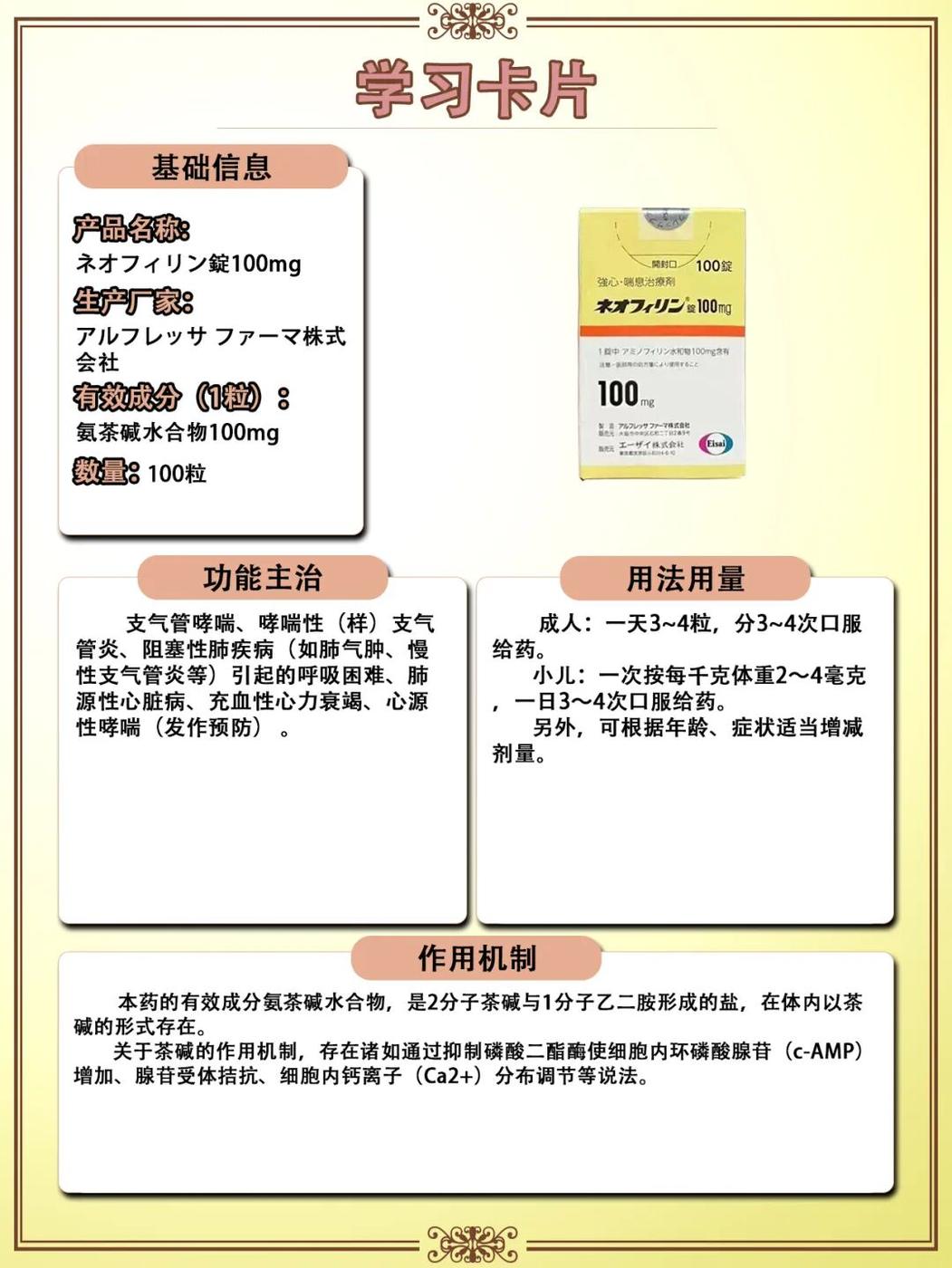
1 tablet of China-Japan Domestique Aminophylline Hydrate 100mg.
English translation of the Japanese package insert is the main text; the Japanese original is shown alongside for verification. Use the language menu (top right) to read the page in another language. This site is for reference only — consult a doctor or pharmacist before use.
Section 1 · 01
English translation
Feature Description The active ingredient in this drug, aminophylline hydrate, consists of salts of 2 molecules of theophylline and 1 molecule of ethylenediamine, and exists in the body as theophylline. Theophylline's mechanism of action includes increased intracellular c-AMP through phosphodiesterase inhibition, adenosine receptor antagonism, and regulation of intracellular Ca2+ distribution.
Section 2 · 02
English translation
Specifications 100 tablets (bottle, rose, desiccant).
Section 3 · 03
English translation
Characteristics White, plain tablet (with seceded line).
Section 4 · 04
English translation
Ingredient Information Active ingredient: 1 tablet of China-Japan Domestic Aminophylline Hydrate 100mg. Additives: calcium carmerose, calcium stearate, corn starch, hydroxypropyl cellulose, povidone.
Section 5 · 05
English translation
Indications Respiratory distress in bronchial asthma, asthma-like bronchitis, obstructive pulmonary diseases (emphysema, chronic bronchitis, etc.), cor pulmonale, congestive heart failure, and cardiac asthma (attack prevention).
Section 6 · 06
English translation
Dosage and Administration As aminophylline hydrate, adults typically receive 300~400 mg per day, divided orally into 3~4 divided doses. For children, 2~4 mg/kg per dose is administered orally 3~4 times a day. Adjust appropriately according to age and symptoms.
Section 7 · 07
English translation
Notes 1. "Common Efficacy" Since side effects caused by theophylline are often caused by increased blood concentrations, it is advisable to properly monitor blood levels and establish dosing plans tailored to each patient. 2. Congestive Heart Failure Use with caution as theophylline blood levels may increase.
Section 8 · 08
English translation
Side Effects 1. Shock, anaphylactic shock (both unknown frequency) Symptoms such as urticaria, pallor, sweating, low blood pressure, and difficulty breathing may occur. 2. Convulsions and impaired consciousness (both frequency unknown) Convulsions, delirium, coma, and other impaired consciousness may occur, so appropriate measures such as administration of anticonvulsants should be taken. 3. Acute encephalopathy (frequency unknown) Since convulsions and consciousness disturbances may lead to acute encephalopathy, if such symptoms appear, discontinue administration and take appropriate measures such as anticonvulsant medication. 4. Rhabdomyolysis (frequency unknown) If weakness, muscle pain, increased CK occur, or other symptoms, discontinue administration, provide appropriate treatment, and be cautious of acute kidney damage caused by rhabdomyolysis. 5. Gastrointestinal bleeding (frequency unknown) Gastrointestinal bleeding (vomiting blood, blood from the lower throat, etc.) caused by ulcers may occur. 6. Erythroblastic tuberculosis (frequency unknown) Anemia may occur. 7. Liver dysfunction and jaundice (frequency unknown) Liver dysfunction (such as elevated AST and ALT levels) and jaundice may occur. 8. Rapid breathing and hyperglycemia (both unknown frequency) 9. Other side effects (1) Hypersensitivity: rash, itching, urticaria, erythema (erythema multiforme, exudative erythema, etc.), fixed drug rash. (2) Neuropsychiatric system: headache, insomnia, nervousness (excitement, irritability, irritability), anxiety, dizziness, tinnitus, tremors, numbness, involuntary movements, hypertonia. (3) Circulatory system: facial flushing, palpitations, tachycardia, facial pallor, arrhythmias (such as ventricular premature contractions). (4) Digestive system: nausea, vomiting, loss of appetite, abdominal pain, diarrhea, abdominal bloating, indigestion (such as heartburn), hiccups. (5) Urinary system: proteinuria, frequent urination. (6) Metabolic abnormalities: elevated serum uric acid levels, CK (Cough Fever), etc. (7) Liver: Elevated levels of AST, ALT, AL-P, LDH, and γ-GTP, etc. (8) Blood: anemia, eosinophil increase. (9) Others: swelling, fatigue, joint pain, limb pain, sweating, chest pain, hypokalemia, nosebleeds, numbness (around mouth and tongue).
Section 9 · 09
English translation
taboo 1. Patients with a history of serious adverse reactions to this drug or other xanthine drugs. 2. Patients who have used adenosine (adenoscan) within 12 hours.

Source images

1 images

Need help sourcing Japanese medicines or OEM production?

💬