Fursultiamine
日本語原題:フルスルチアミン静注50mg「トーワ」
In one tube (20mL), Nippon Fursultiamine Hydrochloride 54.58 mg (50 mg as flusultiamine).
Source images
1 imagesThe artwork keeps its original Japanese/Chinese lettering. Open “Text in this image” under a picture to read what it says in your language (machine-read, may contain errors).
Text in this image machine-read · may contain errors
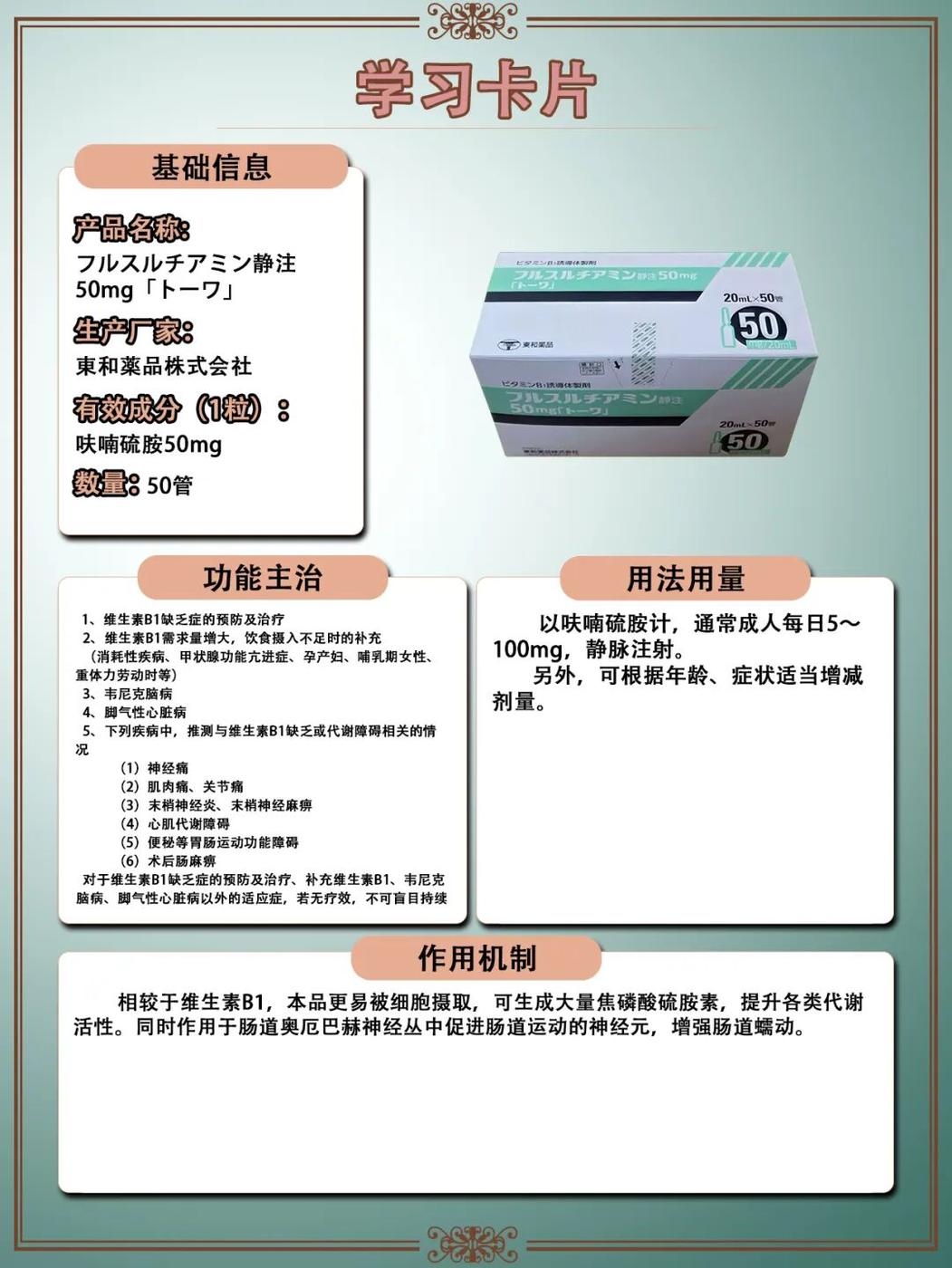
Basic information Product Name: Flusultiamine is administered by intravenous injection 20ml×50m Towa Pharmaceutical Co., Ltd Active ingredient (1 capsule): 20ml-50m Furantiamine 50mg Quantity: 50 tubes Functions and indications Usage and dosage 1. Prevention and treatment of vitamin B1 deficiency Using rapantiamine, the average daily dose for adults is usually 5~ 2. Supplementation when vitamin B1 demand increases and dietary intake is insufficient 100mg, intravenous injection. (Wasting diseases, hyperthyroidism, pregnant and postpartum women, breastfeeding women, Additionally, adjustments can be adjusted appropriately according to age and symptoms During heavy physical labor, etc.) 3. Wernicke's encephalopathy Dosage. 4. Beriberi-related heart disease 5. Among the following diseases, it is presumed to be related to vitamin B1 deficiency or metabolic disorders (1) Neuralgia (2) Muscle pain and joint pain (3) Peripheral neuritis, peripheral nerve paralysis (4) Myocardial metabolic disorders (5) Gastrointestinal motility disorders such as constipation (6) Postoperative intestinal paralysis For the prevention and treatment of vitamin B1 deficiency, supplementation with vitamin B1 and Vennick For indications other than encephalopathy and beriberi, if there is no therapeutic effect, it should not be continued blindly Mechanism of action Compared to vitamin B1, this product is more easily absorbed by cells and can produce large amounts of thiamine pyrophosphate, enhancing various metabolic processes Activity. At the same time, it acts on neurons in the Auerbach plexus of the intestine that promote intestinal motility, enhancing intestinal motility.
基础信息 产品名称: フルスルチアミン静注 20ml×50m 東和藥品株式会社 有效成分(1粒): 20ml-50m 呋喃硫胺50mg 数量:50管 功能主治 用法用量 1、维生素B1缺乏症的预防及治疗 以喃硫胺计,通常成人每日5~ 2、维生素B1需求量增大,饮食摄入不足时的补充 100mg,静脉注射。 (消耗性疾病、甲状腺功能亢进症、孕产妇、哺乳期女性、 另外,可根据年龄、症状适当增减 重体力劳动时等) 3、韦尼克脑病 剂量。 4、脚气性心脏病 5、下列疾病中,推测与维生素B1缺乏或代谢障碍相关的情 (1)神经痛 (2)肌肉痛、关节痛 (3)末梢神经炎、末梢神经麻痹 (4)心肌代谢障碍 (5)便秘等胃肠运动功能障碍 (6)术后肠麻痹 对于维生素B1缺乏症的预防及治疗、补充维生素B1、韦尼克 脑病、脚气性心脏病以外的适应症,若无疗效,不可盲目持续 作用机制 相较于维生素B1,本品更易被细胞摄取,可生成大量焦磷酸硫胺素,提升各类代谢 活性。同时作用于肠道奥厄巴赫神经丛中促进肠道运动的神经元,增强肠道动。
Basic information Product Name: Flusultiamine is administered by intravenous injection 20ml×50m Towa Pharmaceutical Co., Ltd Active ingredient (1 capsule): 20ml-50m Furantiamine 50mg Quantit…